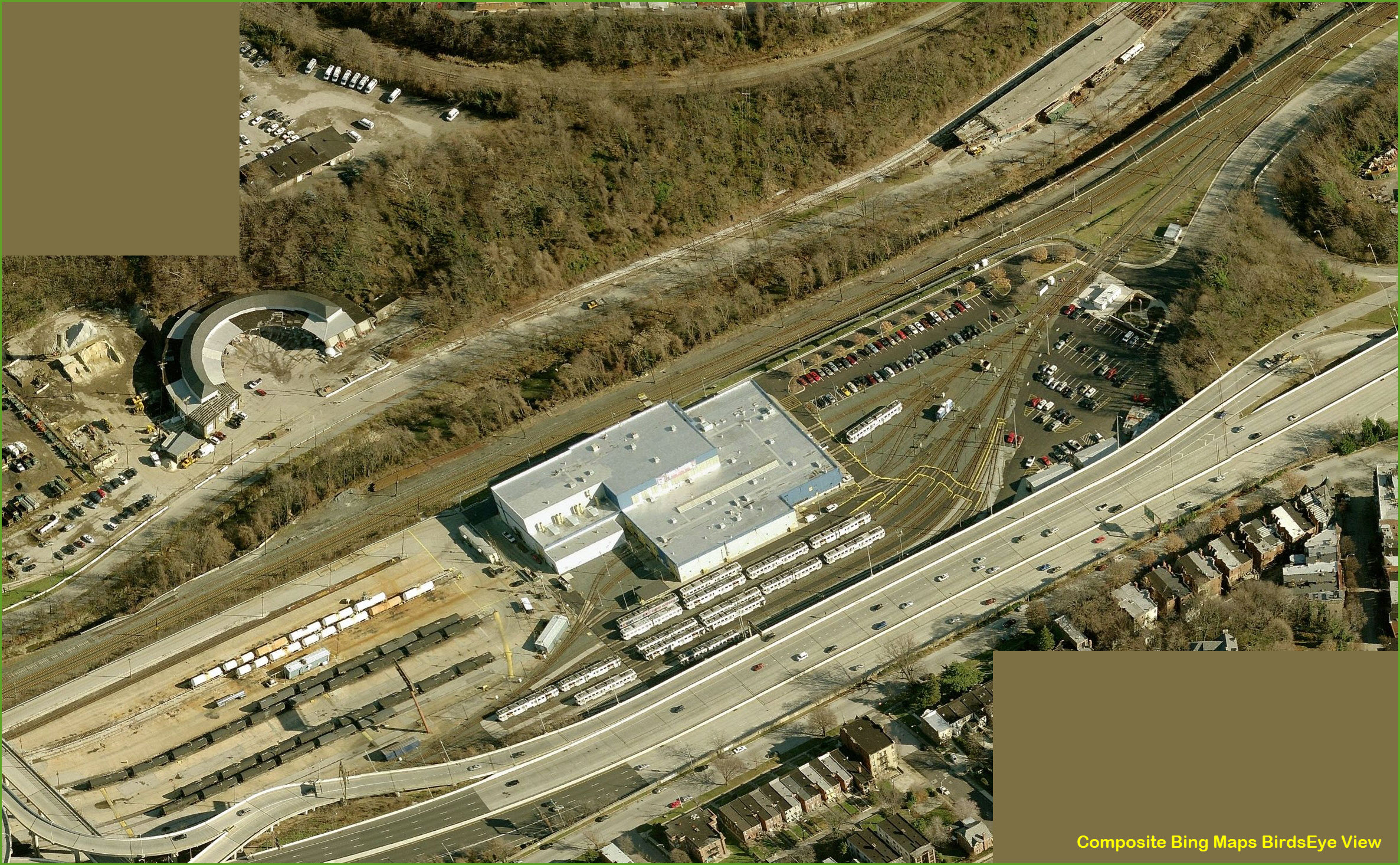
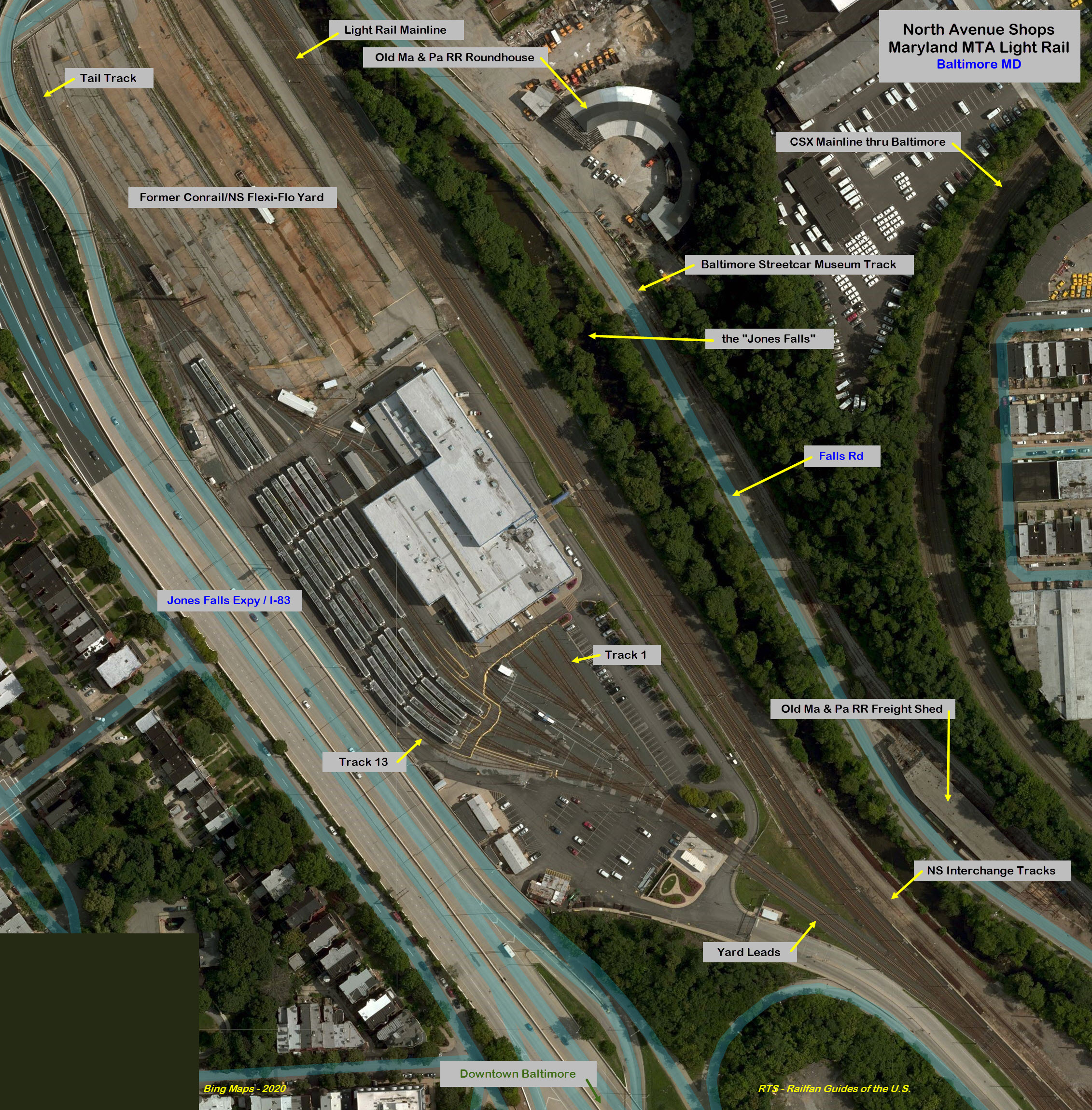
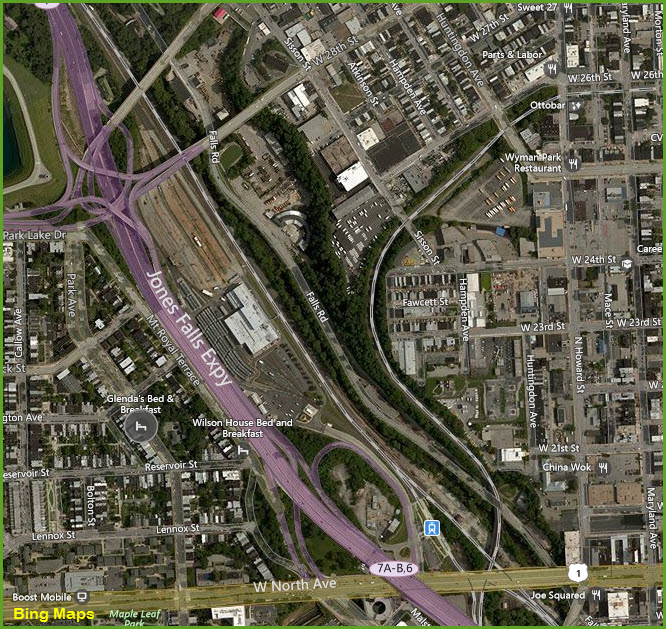
The North Avenue Shop is the main repair and maintenance facility for the
Baltimore Light Rail System. They can do every and anything on or to the
LRV's (light rail vehicles).
This includes, but not limited to:
● Daily Inspections
● Weekly Inspections
● Monthly inspections
● Full HVAC repair, maintenance, replacement, calibration/adjustment, including:
-- Freon charging
-- Compressor motor repairs/replacement
-- Control and electronics maintenance, repair and replacement
-- Heating element replacements
-- HVAC system swap-out done on track 1N because there is no catenary over the track there,
takes 3 or 4 guys
● Full truck maintenance, repair, and replacement, including:
-- Motor swap-out's and repair (VERY reliable, no brushes, clean!, high-speed bearings)
-- Axle change outs
-- Axle bearing replacement (if needed, these are high speed bearings too, and very rarely need attention)
-- Wheel and isolation pad replacement
-- Wheel profiling/contouring
-- Disc brake, brake shoe replacement (a 2 minute job, wish my car was this easy!)
-- Disc brake rotor replacement
-- Transmission maintenance, repair, and replacement
-- Truck removal done on 2S because of the built-in lifts
-- Record hub-o-meter readings, replace if they go bad (weekly)
-- Replace wheel speed sensors (4) if bad
● Window replacement (Side windows take about 10-15 minutes, windshields take about an hour)
● Air system maintenance, includes:
-- Fixing and repairing airlines
-- Air compressor repair and replacement
● Coupler maintenance, repair, and replacement, including:
-- Lubricating
-- Valve and airline replacement
-- Centering cylinder maintenance
-- Uncoupling piston replacement
-- MRP valve maintenance and replacement
-- Electrical head maintenance, repair, and replacement (keeping water out is a major PIA!)
● Pantograph maintenance, repair, and replacement, including:
-- Replacement of shoes
-- Checking tension (should be 22lbs of upward force on the catenary)
-- Checking electrical straps/jumpers/cables
-- Pantograph replacement done on 1N because there is no catenary wire in the way
● Braking system components, including:
-- Above mentioned air compressor maintenance
-- SAV valve repair and replacement
-- SEV valve repair and replacement
-- Brake/Power controller repair and maintenance (operator control in the cab)
-- Braking controller repair and maintenance (the braking smarts)
-- Above mentioned work on brake shoes and rotor
-- The brake calipers maintenance, repair, and replacement
-- Air pressure gauge in cab, replace if necessary, no repairs are done to them
● TRACS computer maintenance, including:
-- Failed board testing, diagnosis and repair (to my knowledge, the computer as a whole never experienced a failure)
-- Cab controls, are all inputs to the TRACS computer, repair/replace/maintain as required
-- Speedometer in cab, replace if bad, no repairs are done to them
● Radio, antenna, and RG-58 cable maintenance and replacement
-- Radios sent to the radio shop at Washington Blvd for repair
● Body and chassis work:
-- Minor and major exterior body work performed by a contractor
-- Minor welding on chassis can be done by shop personnel, major work contracted out
-- Headlight and railroad lamp replacement (and supposed alignment)
-- Turn signal light bulb replacement
-- Turn signal lens replacement if needed
-- Door open and bypass light bulb replacement
-- Replacing bad door switches
-- Windshield wiper replacement
-- Windshield wiper motor replacement
-- Sand filling
● Interior maintenance done by shop personnel, includes:
-- Fluorescent tube and ballast replacement
-- Stop tape replacement
-- Seat replacement
-- Frangible shield replacement (people like to bust them out, a lot!)
-- VCR/DVR and camera maintenance
-- Replace bad door switches
-- Repair/maintain ODK signs including the destination sign
-- PA system repair, maintenance, replacement
-- Route number sign maintenance
● Door maintenance:
-- Sensitive edge check
-- Door maintenance (hinges, etc)
-- Door motor repair, maintenance, replacement
-- Valve and airline repair and replacement
-- Limit switch checks and replacement
● Electrical - Power Systems:
-- Already mentioned pantograph maintenance
-- High-voltage fuse (on the roof)
-- High-voltage lead-in cable to HV switch
-- High-voltage switch and high-speed breaker maintenance
-- Auxiliary module maintenance/repair/replacement (supplies 120/240VAC)
-- Battery charger maintenance
-- Propulsion module maintenance/repair/replacement, there are two, one for each truck
● Electrical not mentioned already:
-- Battery check and replacement if needed
-- High voltage cable checks/hipot
-- Check 24 volt power supplies
-- Circuit breaker replacement if they go bad (rare)
-- Check operation of brake/power controller and the emergency switches
(I may have left a few job responsibilities out after being away from the job for 30 years :-)
The North Avenue facility was built in a former Pennsylvania RR Yard, part of
which was retained for use as a transload facility for (mostly) dangerous
liquids. It was built concurrent with the first phase of the Light Rail
System, and opened in 1991 to serve the testing of the LRV's when they arrived
on the property prior to the opening of the system on April 1992.
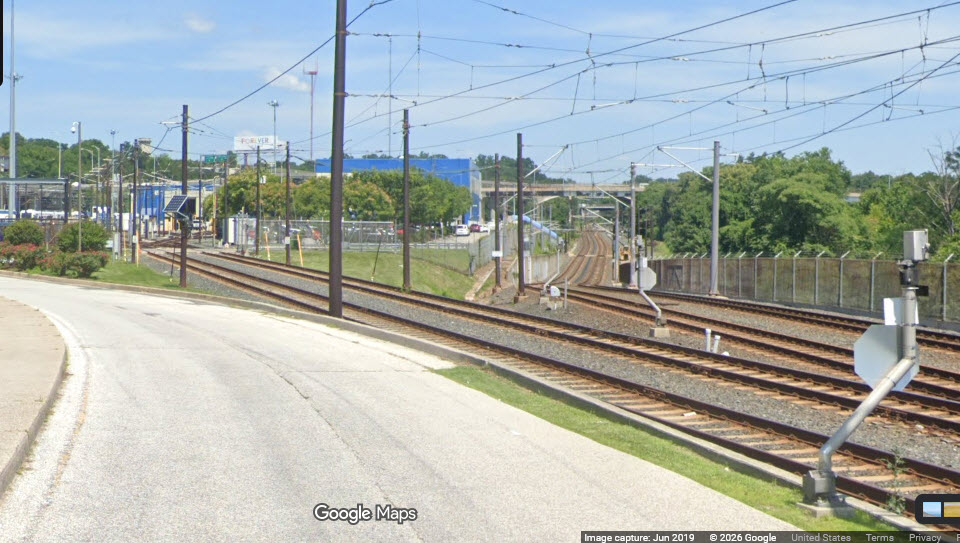
Trains going into the main shops at North Avenue pull into the North Avenue
station, unload passengers, then call Light Rail Control for permission to
enter the yard, using either Yard Lead A or Yard Lead B (the
two tracks going off to the left in the pix below).
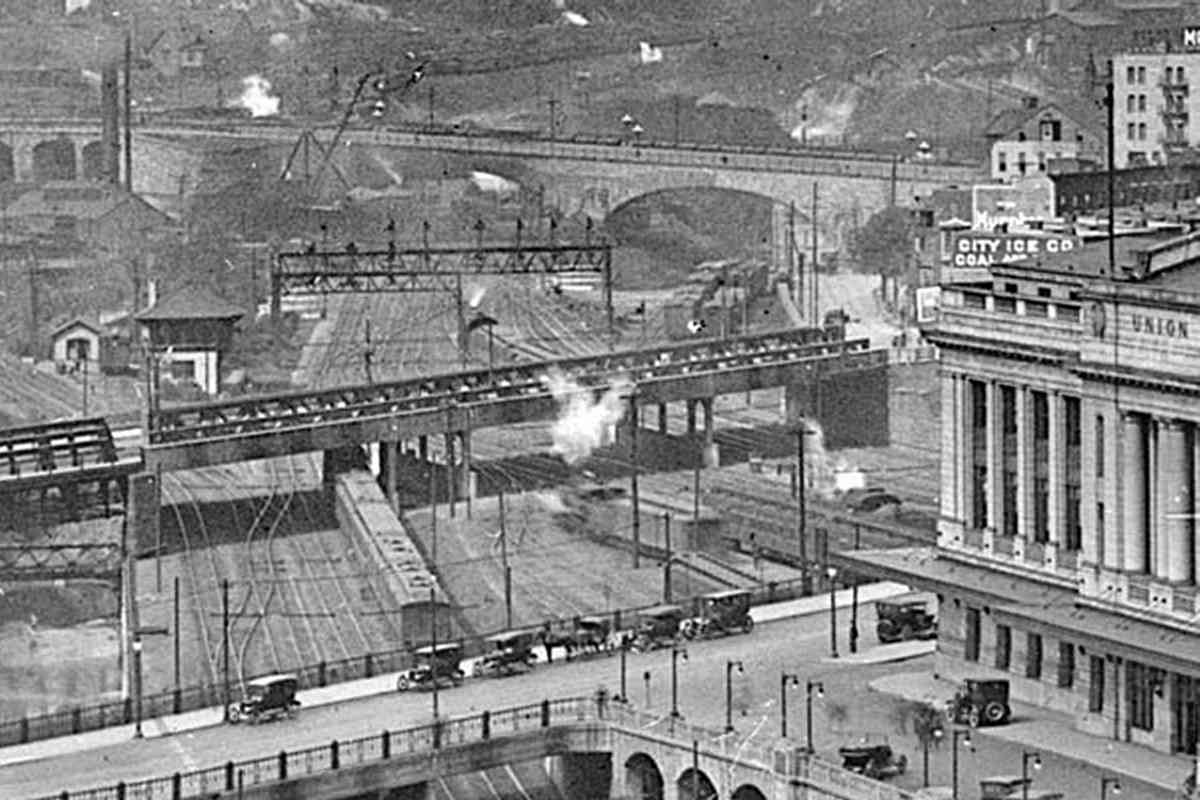
Here is one view of the area where the North Avenue facility is built (just
barely).... the current light-rail yard is at the very top of the picture
which is also the Northern Central heading north to York and Harrisburg
PA. The picture shows (now) Penn Station on the right; tracks heading towards
Washington DC in the middle with the semaphore bridge above; and the exchange track with
the M&Pa under the big arch of North Avenue with the six-eight freight cars on
it. The tracks leading off the left side of the picture at the tower are
heading up to the yard. Somewhere, I have a better picture
of the area with more detail.
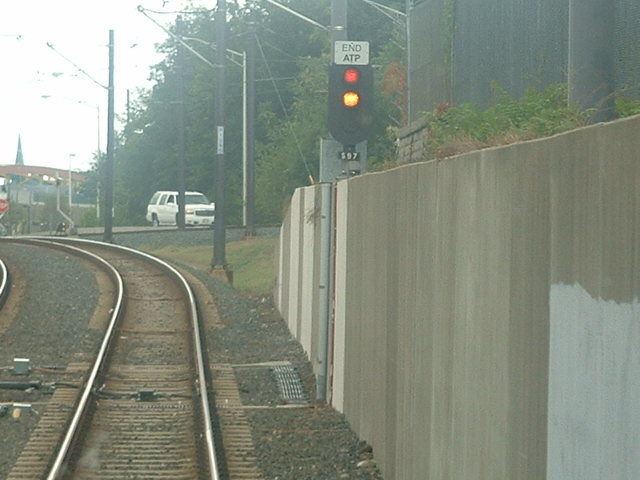
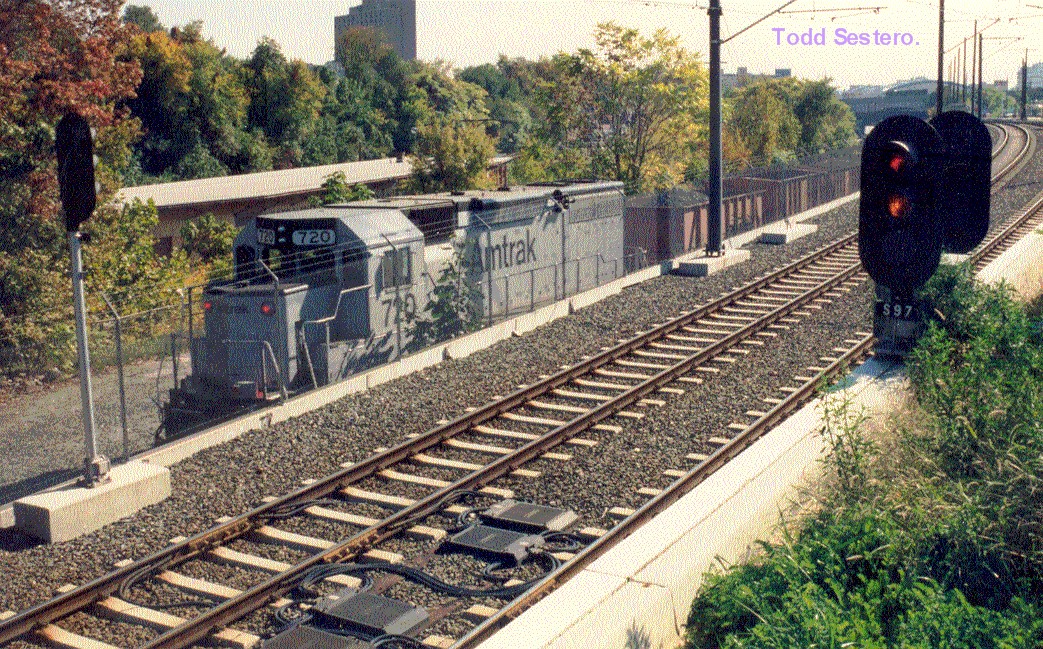
Signal at location 1 - one of the very few "oddball" aspects, ~1996.
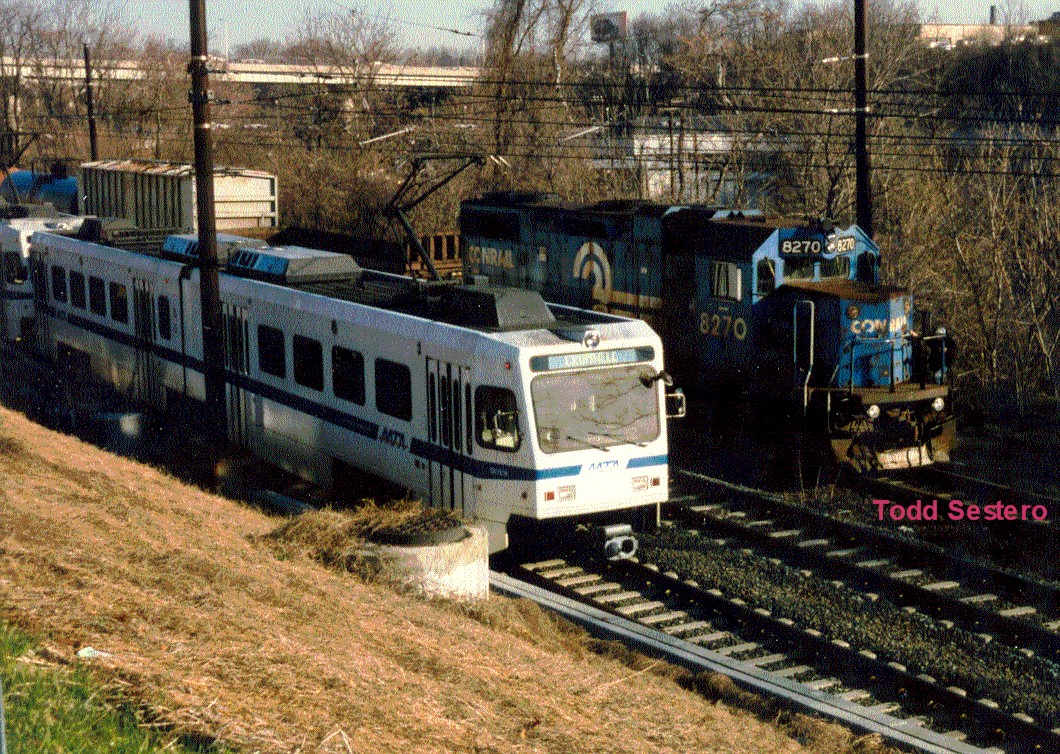
A light rail train and the overnight Conrail freight side-by-side alongside the shops, ~1996.
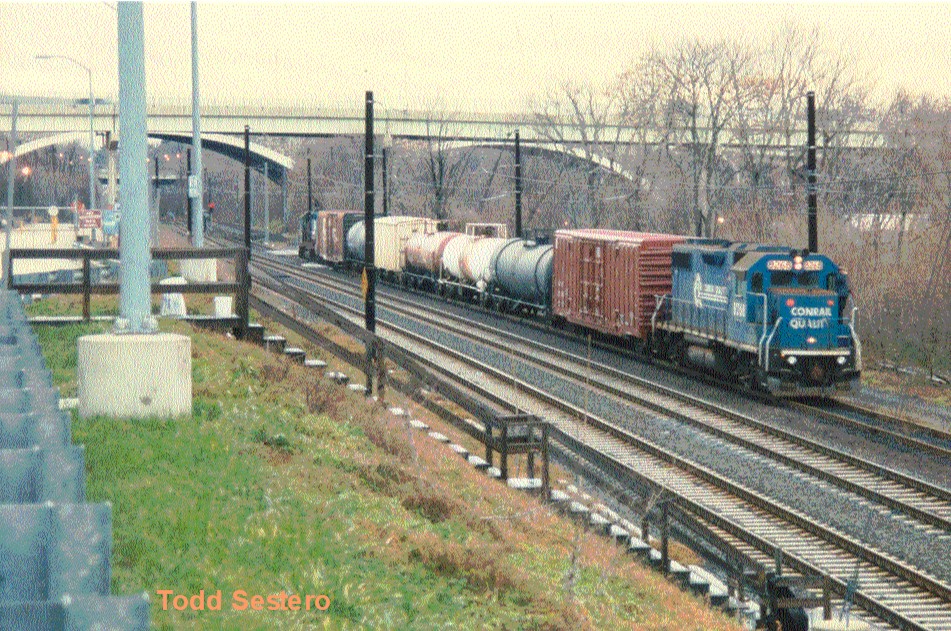
An overnight Conrail freight waiting for clearance to return to Bayview, ~1996.
Signal S97, at location 1, ~1996.
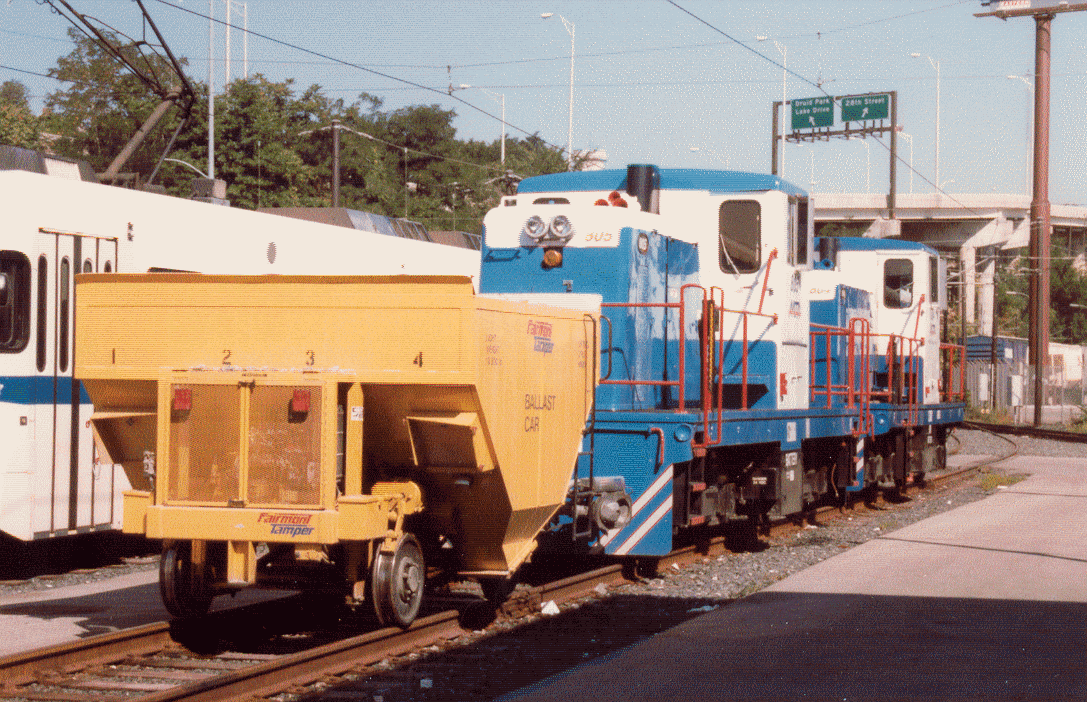
MOW engines 801 and
805 with a ballast car on the MOW track, ~1996.
Track 3 being extended to the tail track, ~1997.
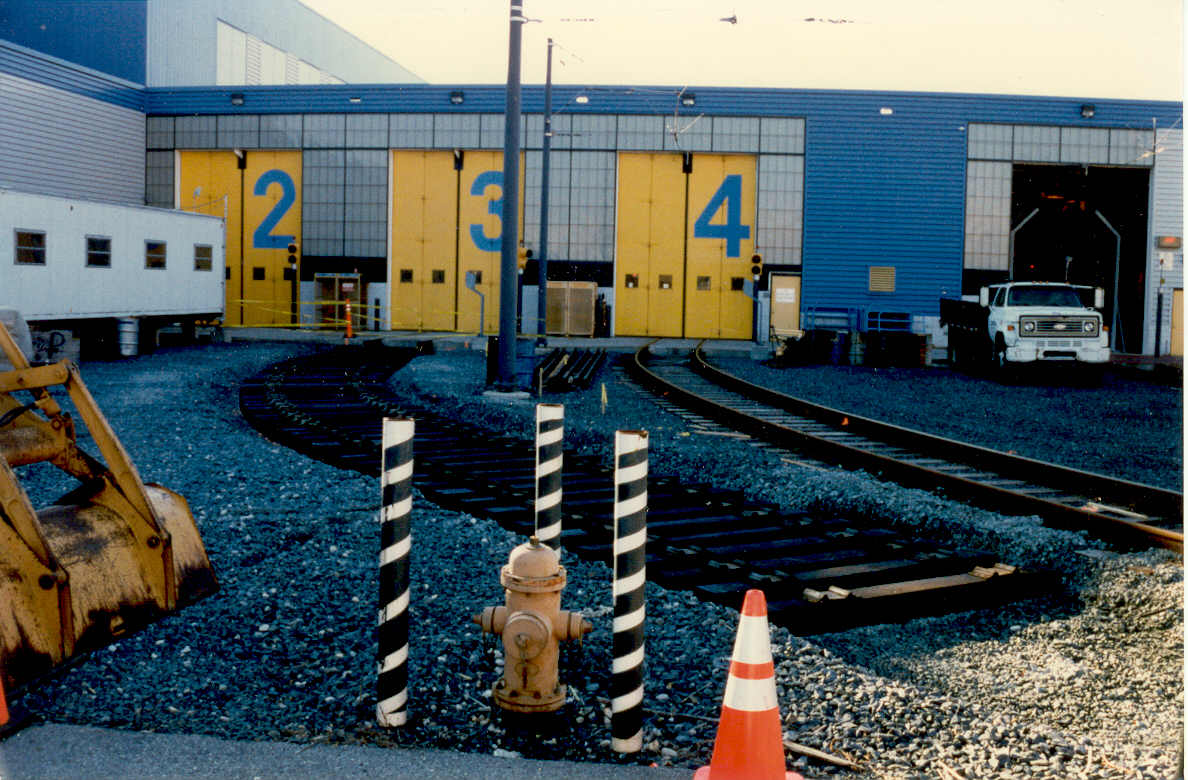
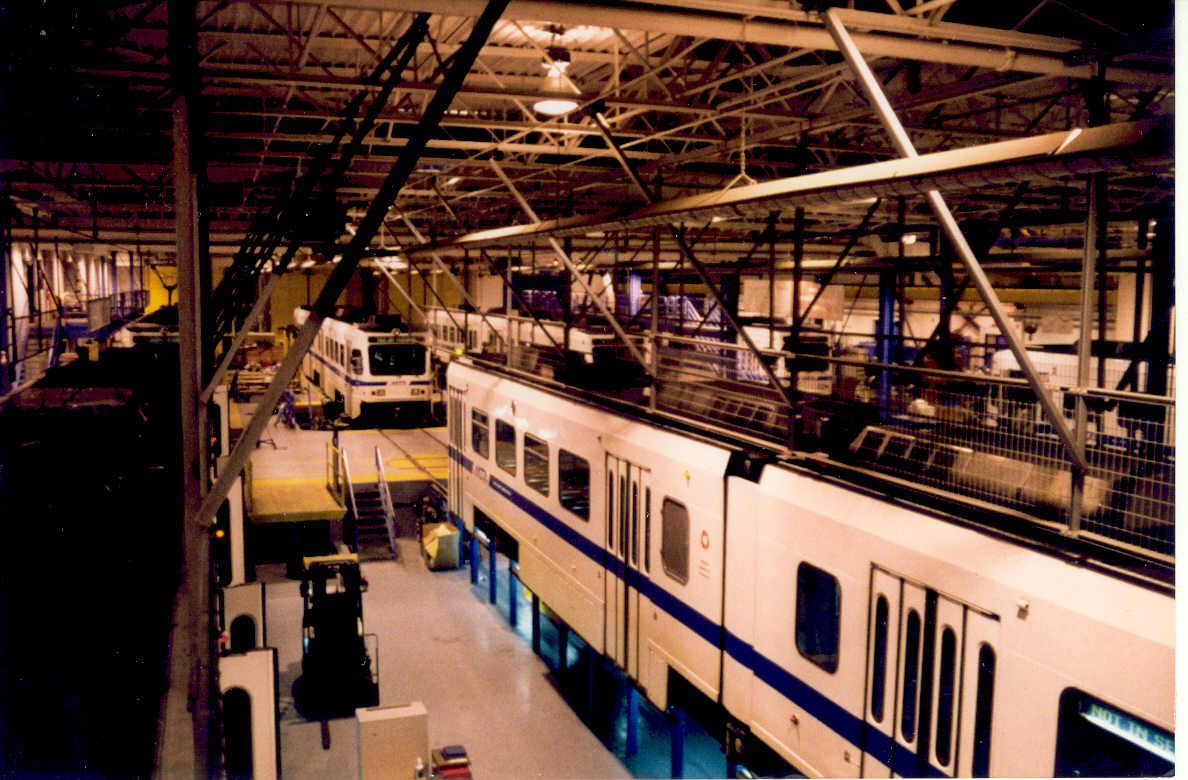
Shot of the service bays from on top of a car on track 4, ~1996. Track
3 & 4 share one large service pit on 3a and 4a.
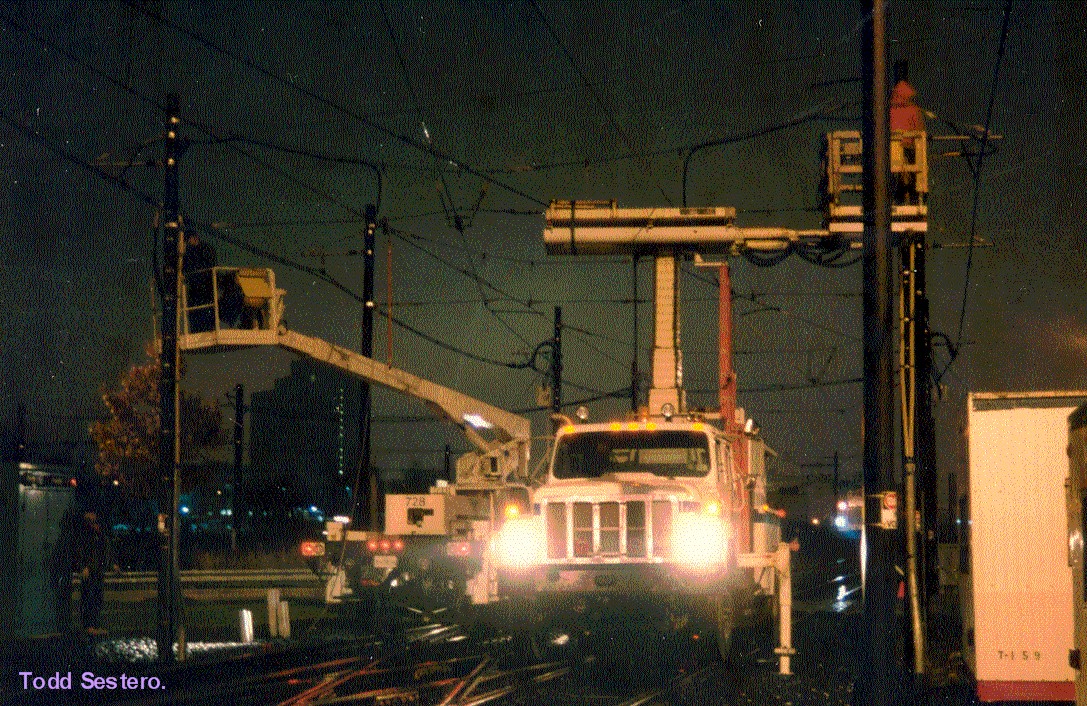
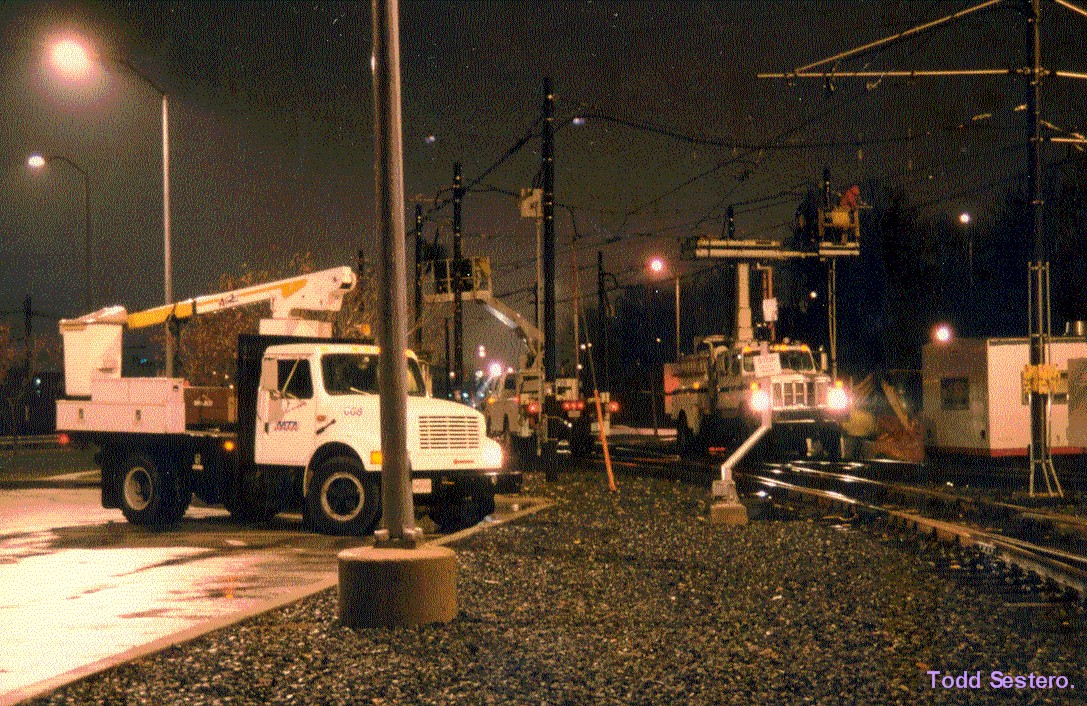
Couple of pictures of night work at Road A, ~1997.
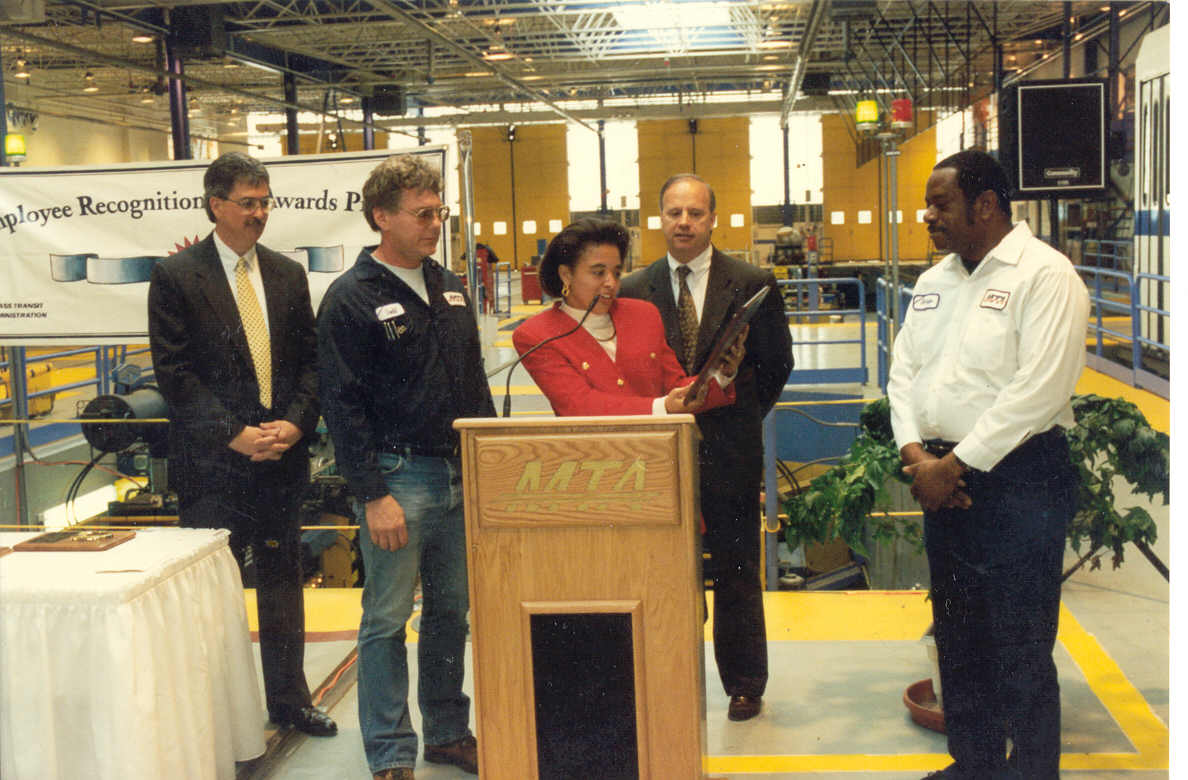
Yours truly getting an award in 1996, John Agro on the left, head of the MTA, and George
Thompson to the right (one of the 3rd shift foremen).
Don't remember who the other two are.
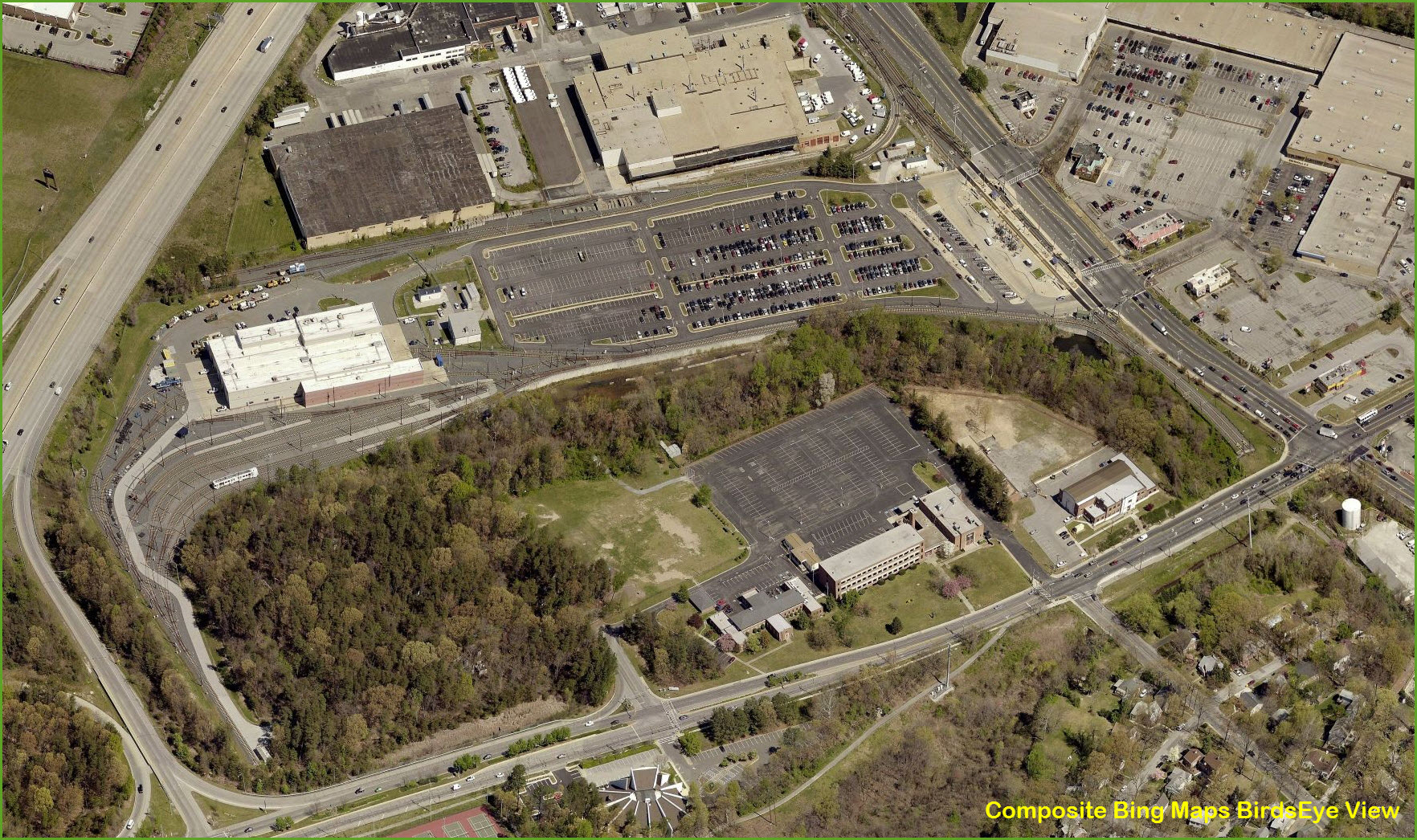
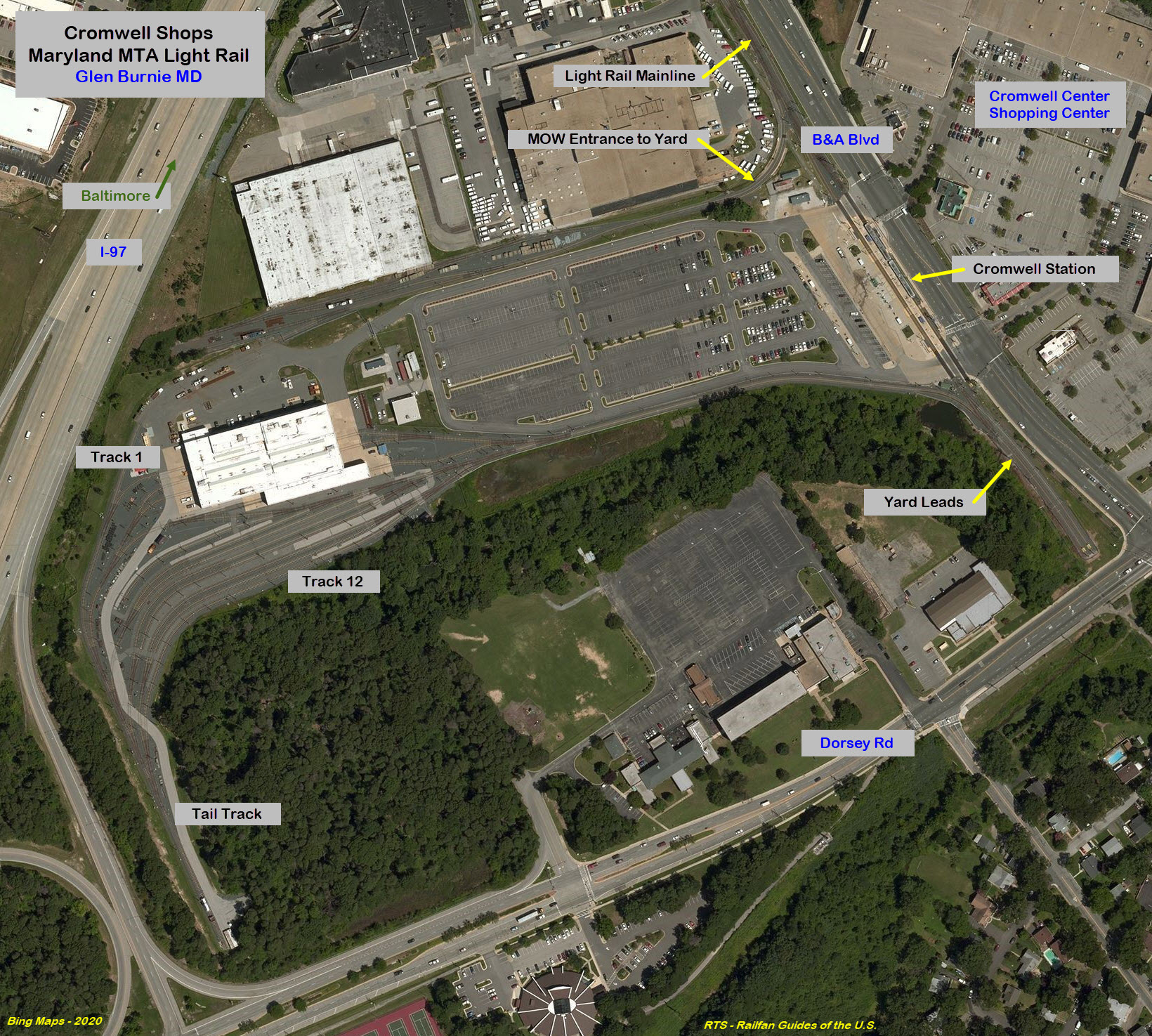
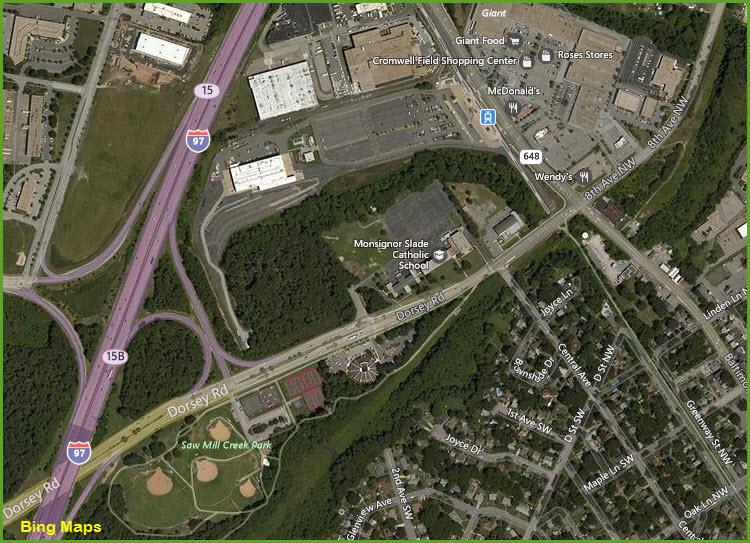
The Cromwell facility was built around 1997, and although open in 1998 when I
left the MTA, it was not being used as an active maintenance facility until a year or so
later.
The Cromwell shops can do routine maintenance items, like inspections and simple
repair and replacement things. All of the heavy-duty stuff, like trucks,
HVAC, pantograph, etc, are done at the main shops.
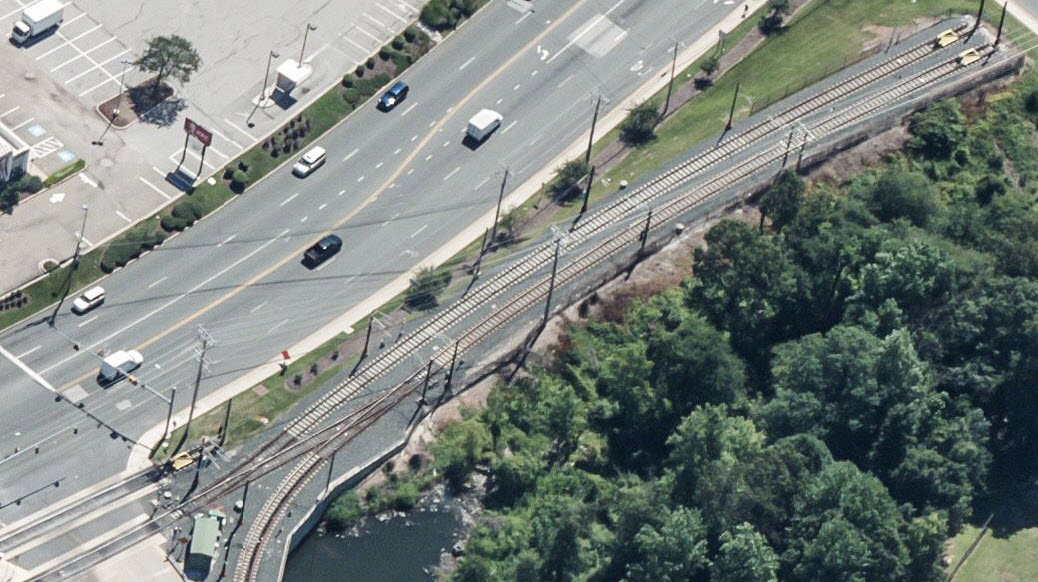
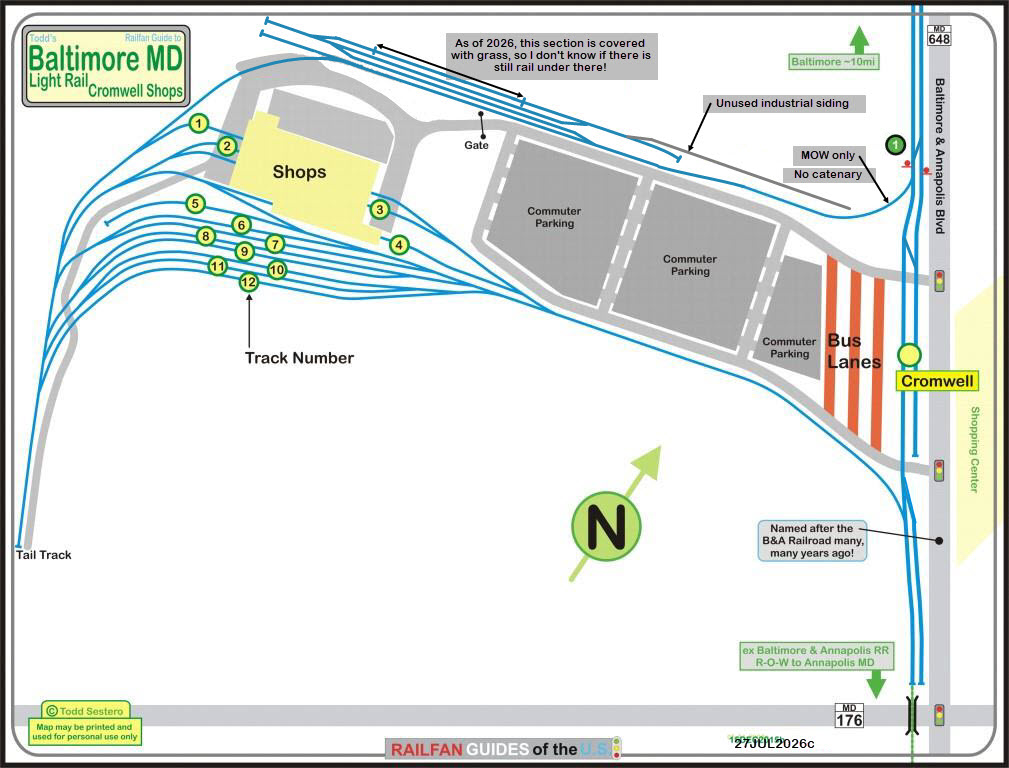
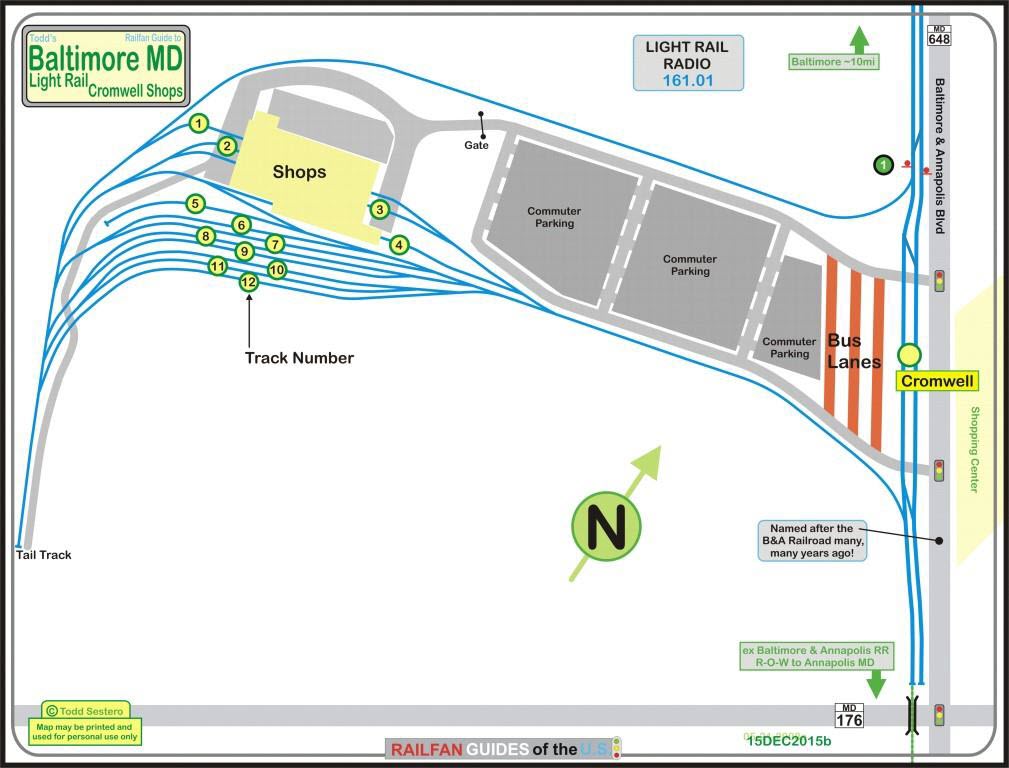
Trains at Cromwell enter the yard via ONE of the tail tracks "beyond", or past the end of the Cromwell station.
The other tail track dead-ends after the parking lot
access road! So only one of the station tracks can be used for access into the yard. I
dunno who designed this, but the layout defies logical thinking. :-) My
guess they were too cheap to put in another switch - cost drives almost every
decision the MTA makes about what to add.
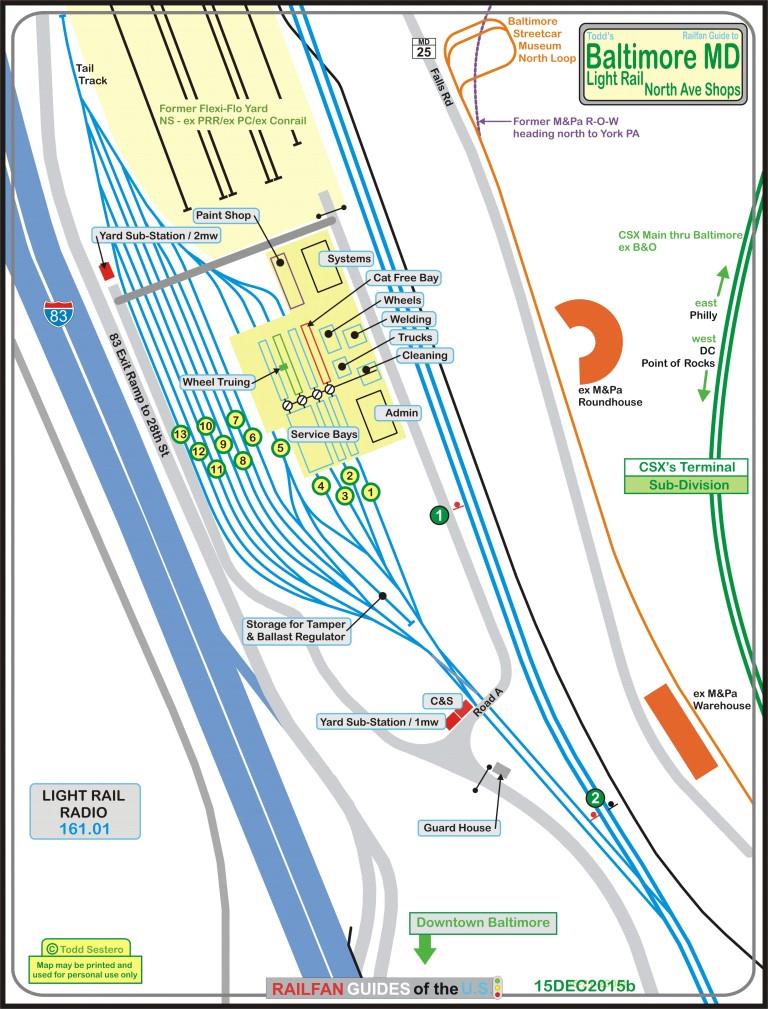
`Notice the added MOW tracakage added since the Cromwell shops opened in the two drawings below (top one is newer):
I also removed the radio freq of 161.01, because they are now using trunking radios (finally).
Disclaimers:
New format 10/26/23: Please check out my disclaimer page for my standard
dribble and contact info here