RAILFAN GUIDES HOME
RAILROAD SIGNALS HOME
The northern side of Toledo probably contains the lion's share of things to visit. The southern side mostly has yards. With that said, you've got the Ann Arbor, CSX, CN, and NS. There are a couple of nice swing bridges crossing the Maumee, and numerous small ones going over the roads and highways of Toledo... a lot!
Not too many signals on the map except for interlockings.
I've split the area up into five sections:
Introduction and
General Information
Toledo north
Toledo south
Toledo northeast
- east side of the Maumee and north of Walbridge
Walbridge
(map only so far)
Train frequencies came from a map put out by Toledo, as seen below. If information on my maps is wrong, blame them.
I would like to thank David Patch for additional information, and Ryan Ramsey for help with the yard information.... there's a lot of them around!
Any additional info / help would be appreciated to make this guide better :-)
Pix are from www.bing.com/maps, aka,
the old maps.live.com.
Aerial pictures were "snagged" by
Techsmith's
Snagit, a great product!
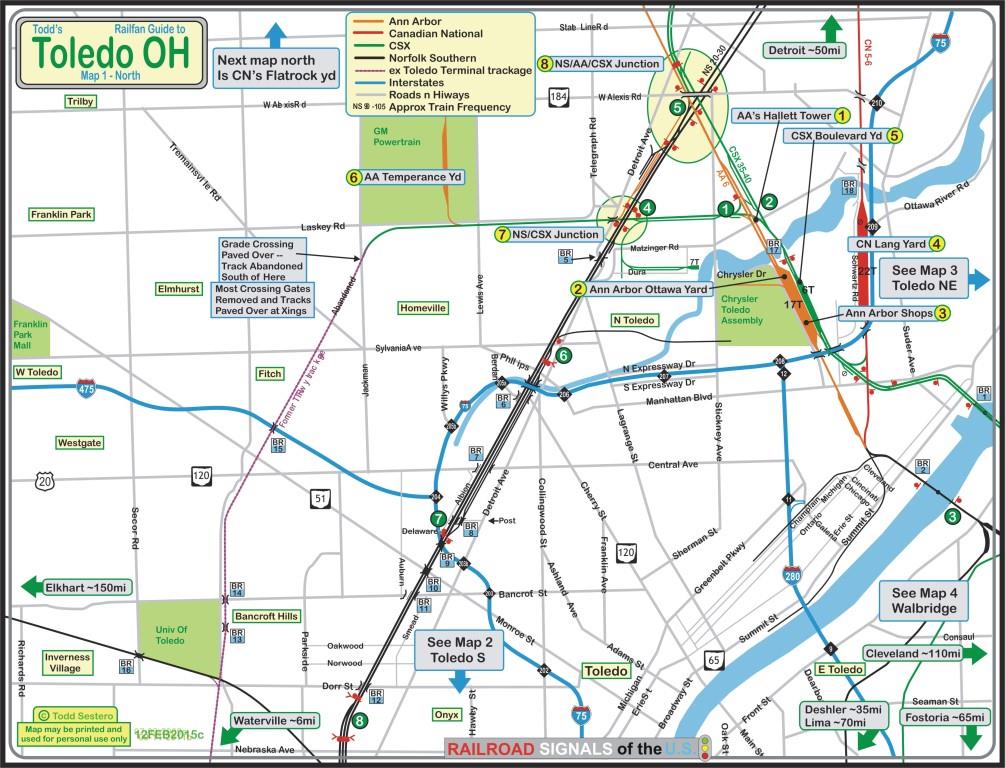
The above map in PDF form is
here

1
2
3
4
5
6
7
8
Maumee River Bridges:
BR1
BR2
BR3 and BR4 are on the Toledo South map
Bridges/overpasses along the NS mainline:
BR5
BR6 BR7
BR8
BR9 BR10
BR11 BR12
Overpasses along the old Toledo Terminal trackage: BR13
BR14 BR15
Signals
SITES
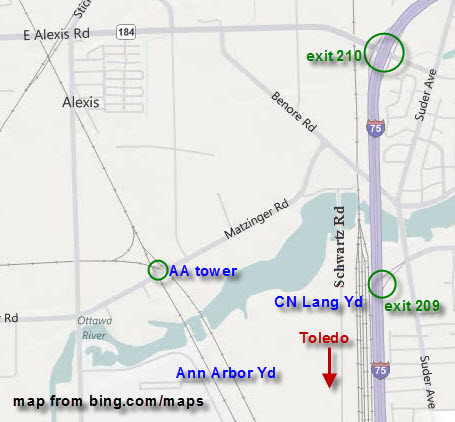
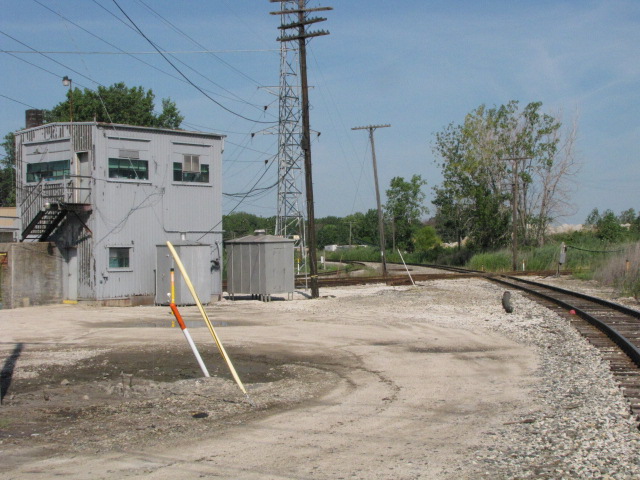
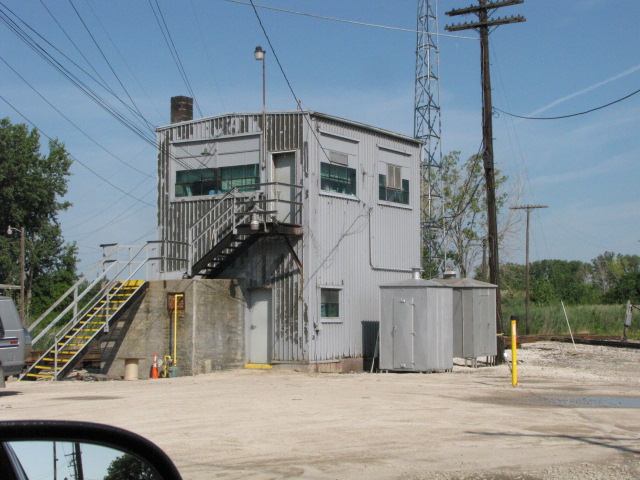
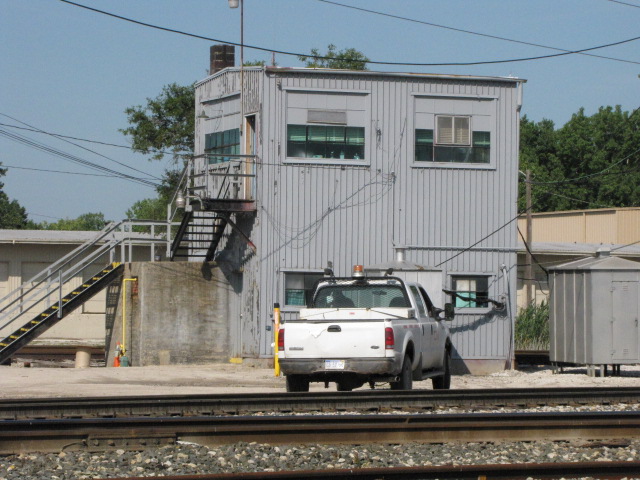
The tower operator doubles as the Ann Arbor dispatcher,
which explains both its status as the last operating tower in Toledo as well
as its likely future survival.
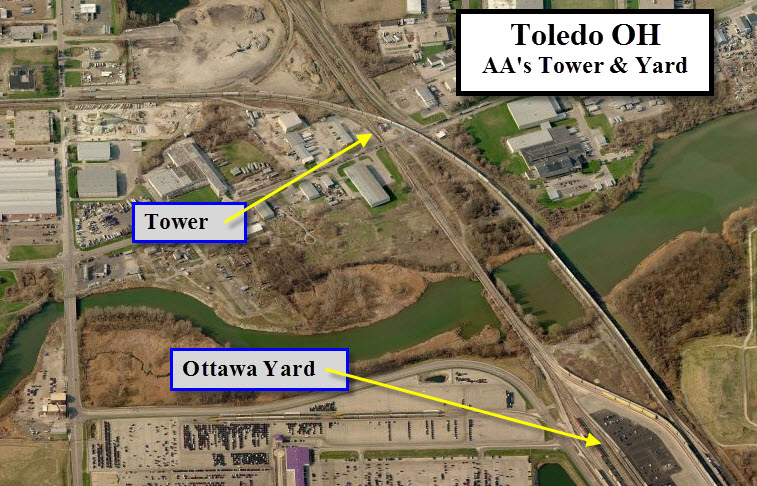
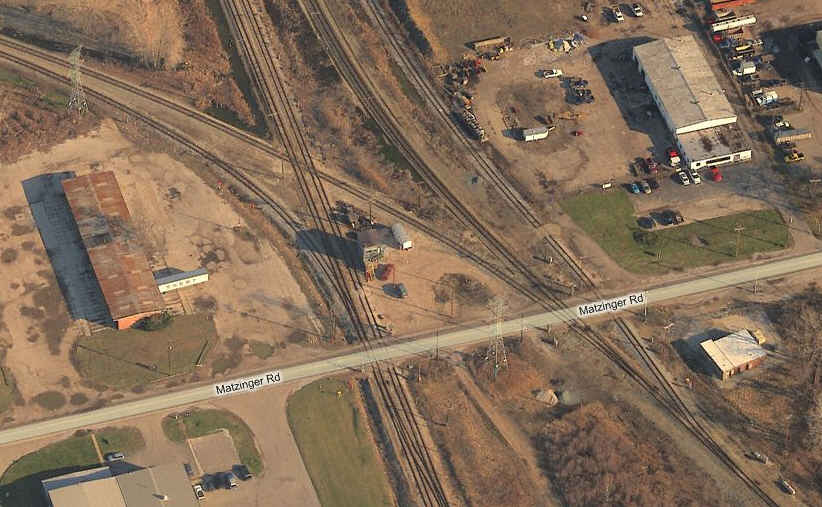
The AA tower..... Good view and pix from up there.
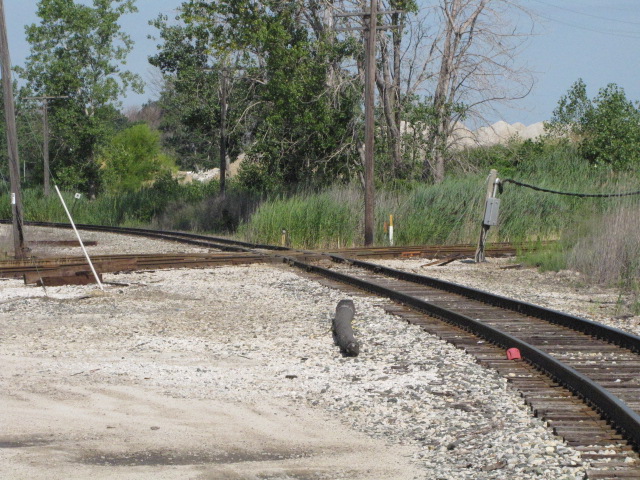
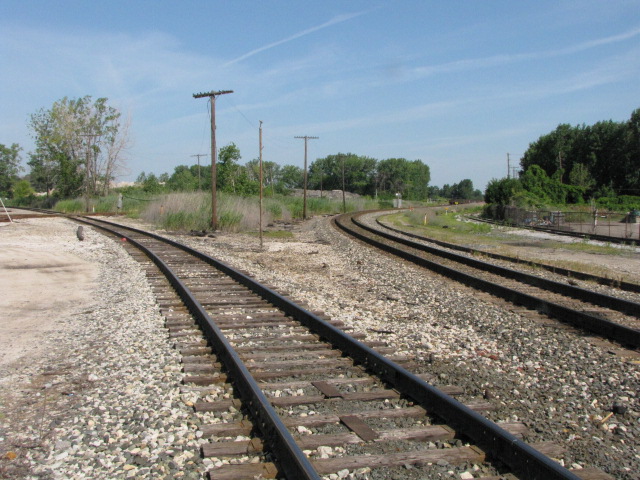



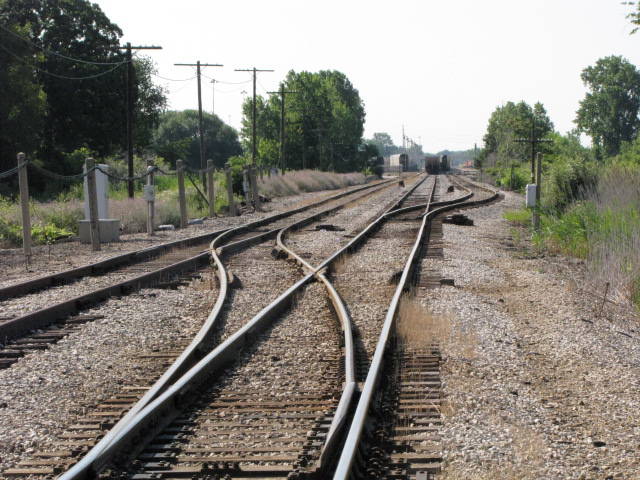 Looking south.
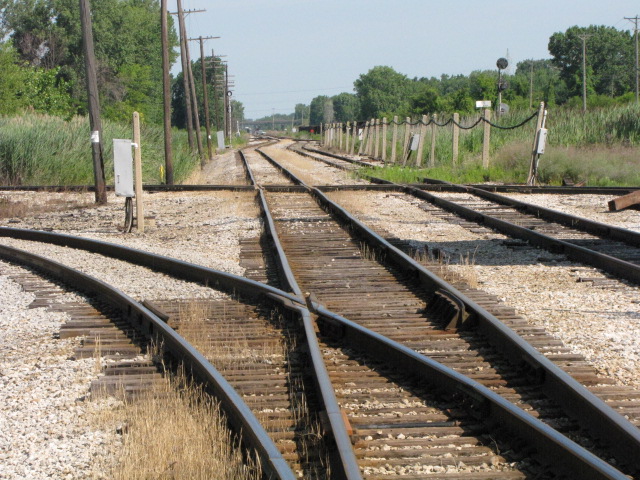
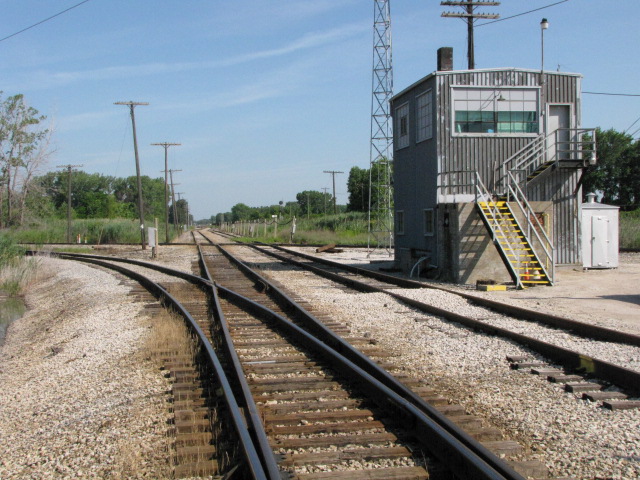 Looking north.
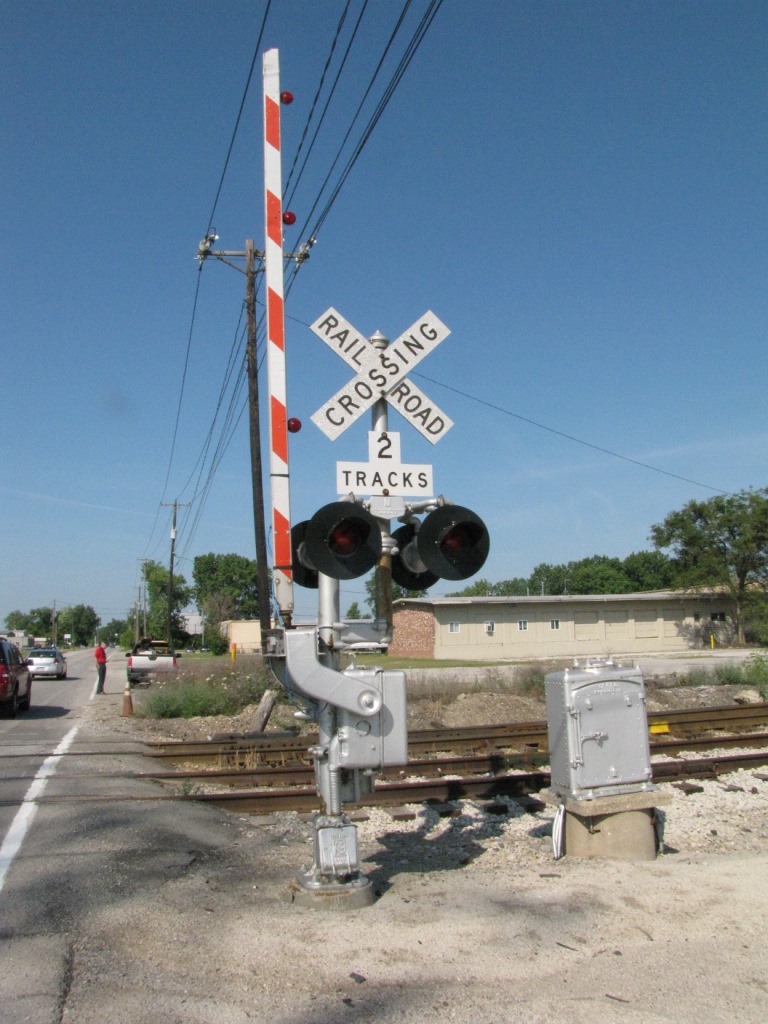
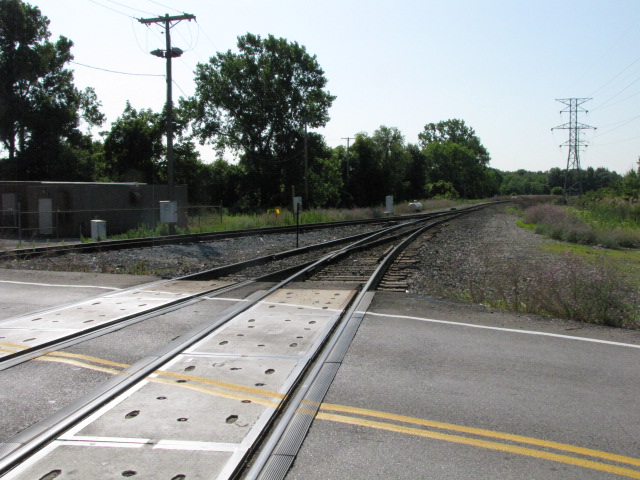
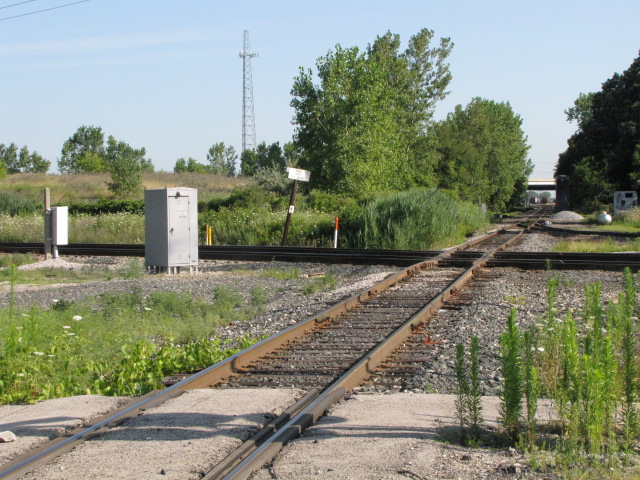
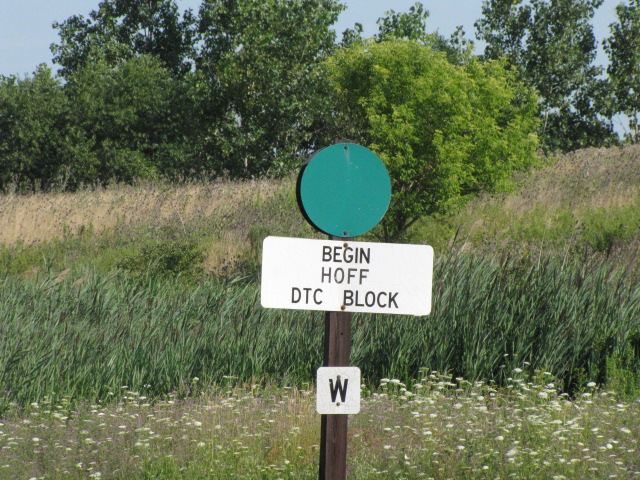
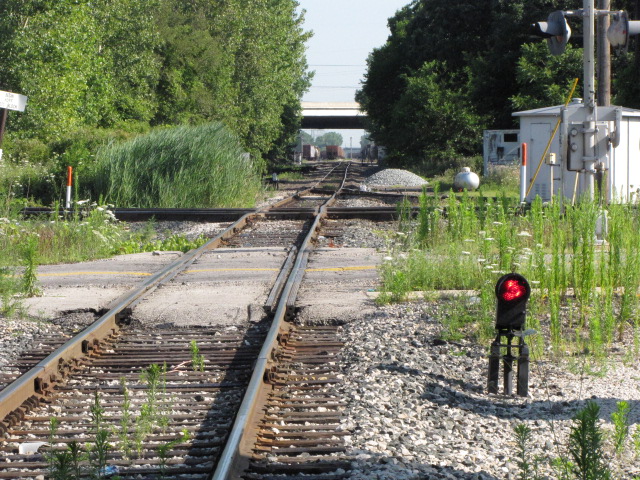
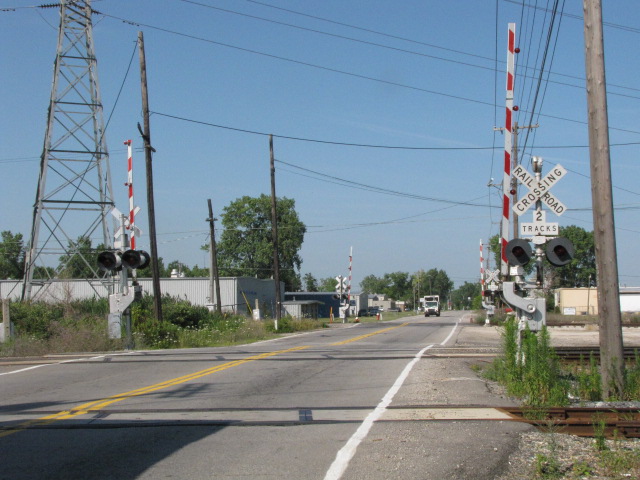 The grade crossing at the tower.
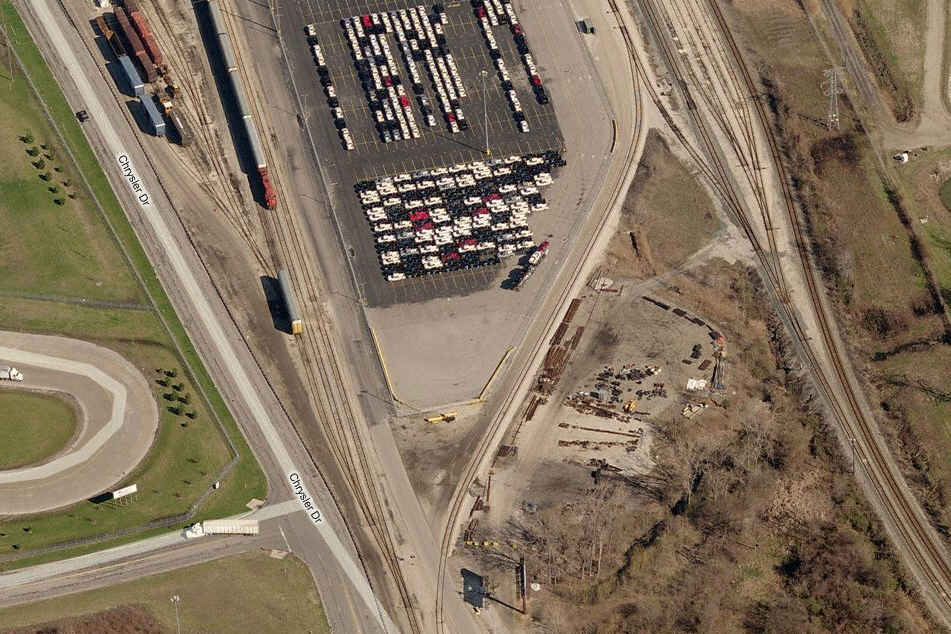
Southern end of the AA yard.
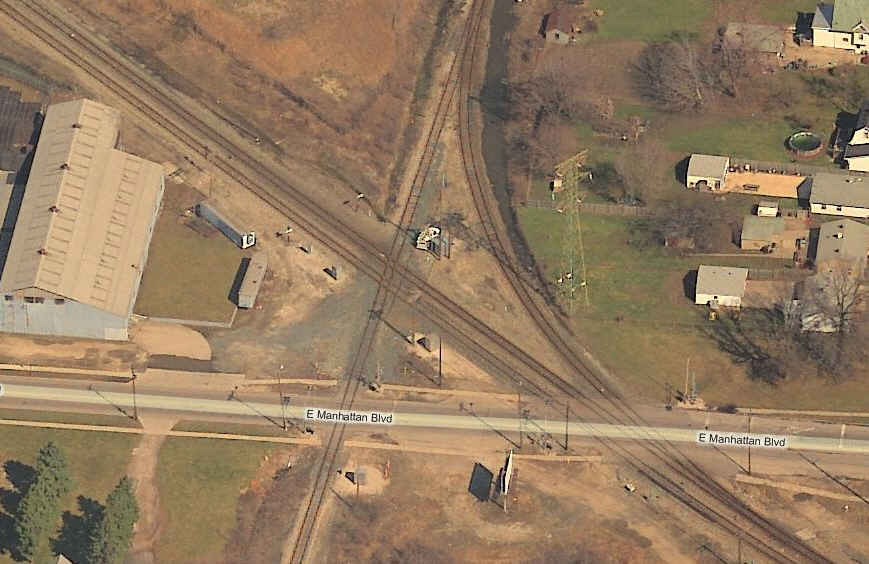
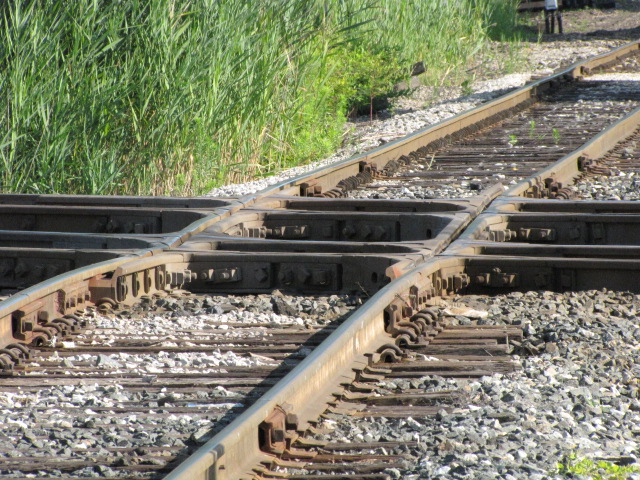
Diamond at the south end of the AA yard.
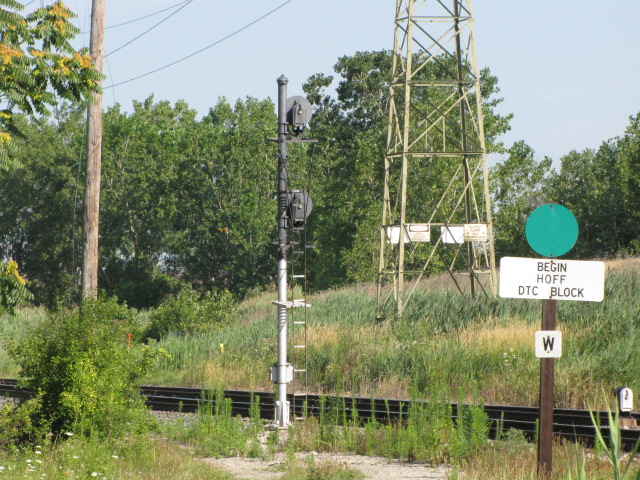
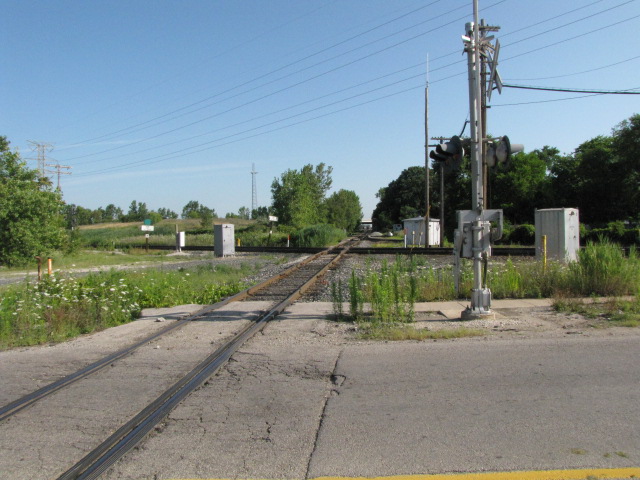
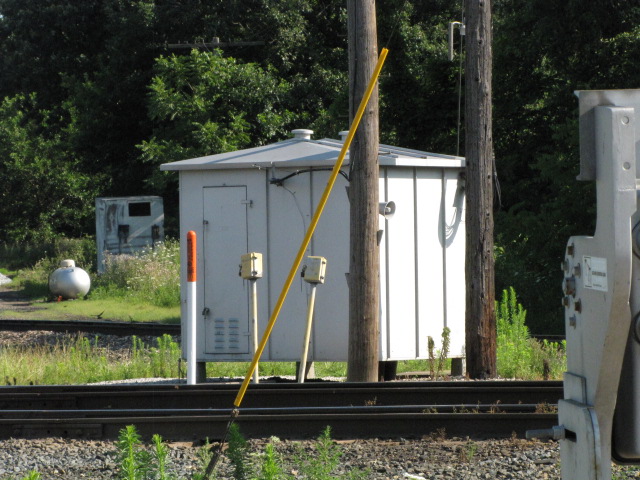
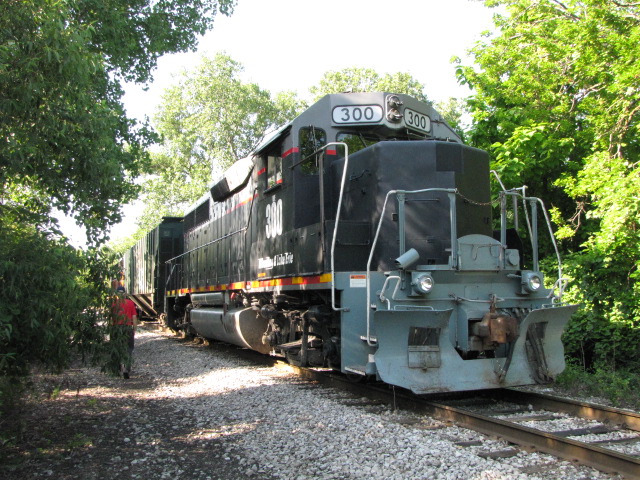
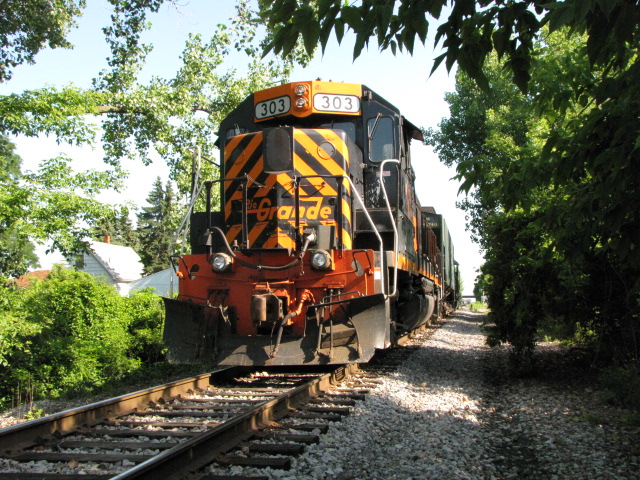
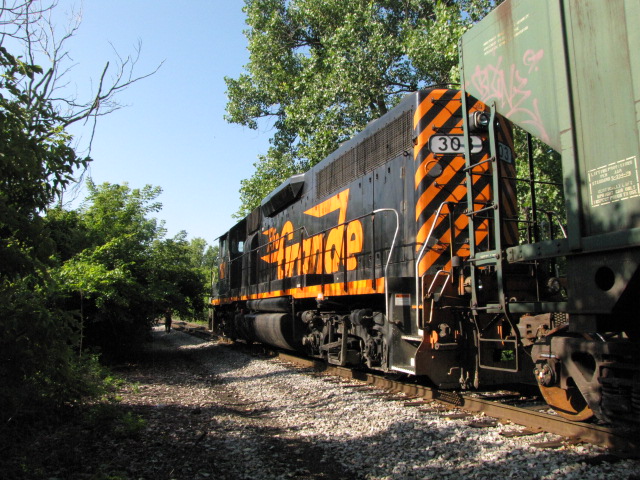
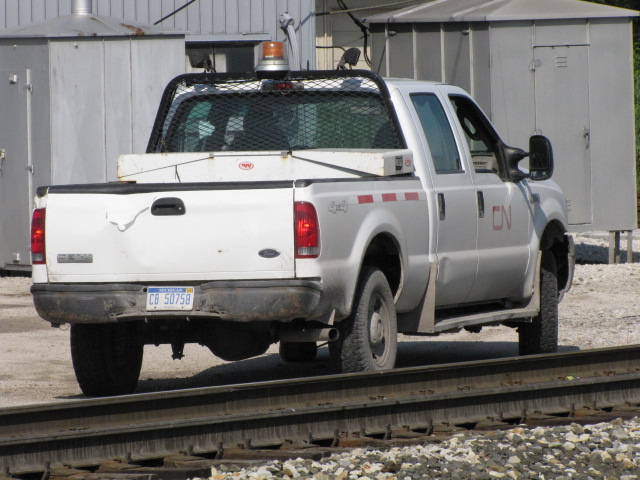
Sometimes you get lucky, except for the RR cop that chased
us off!
This train was parked off the bottom end of the above photo, the single
track on the left, most of it was parked in the trees.
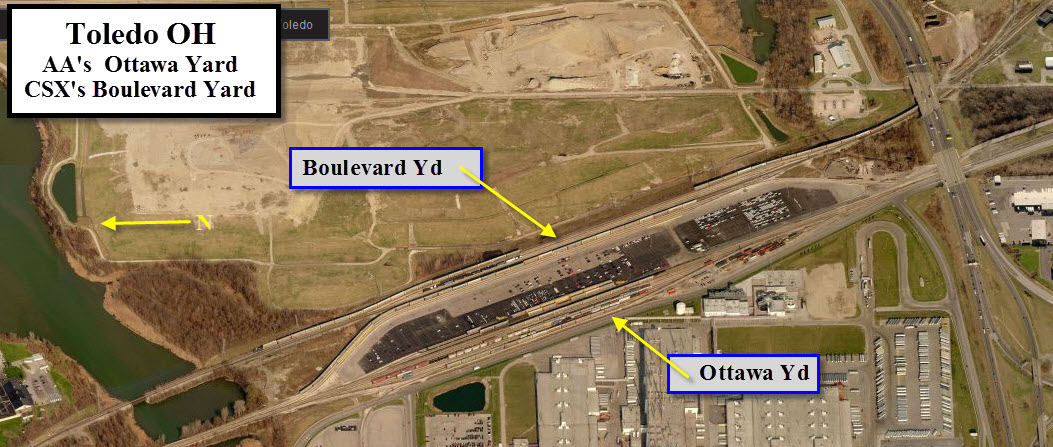
 the shops at Ann Arbor's Ottawa Yard
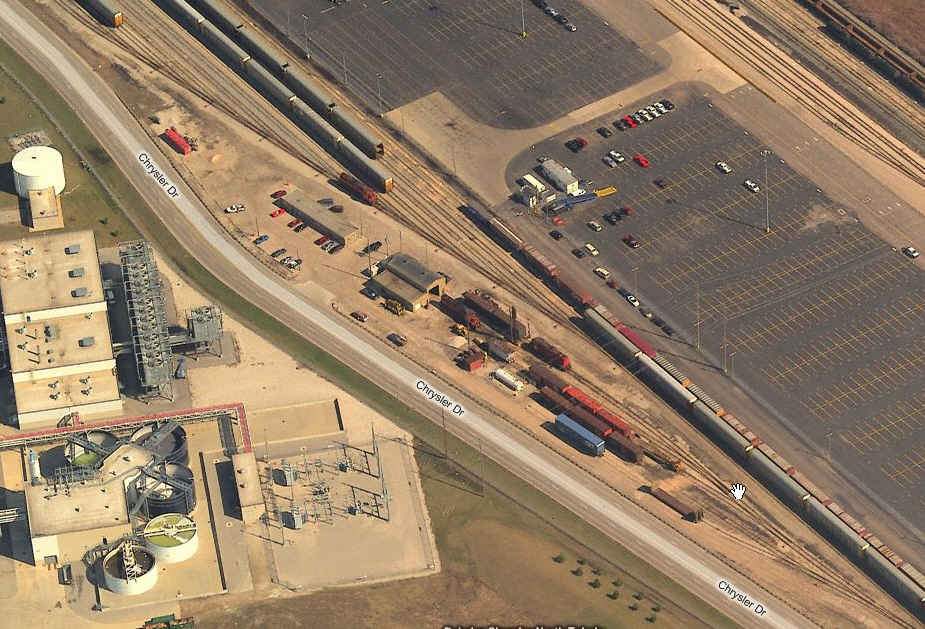
The Ann Arbor engines are kinda in the middle of the yard. Permission was requested at their yard office to wander around and take pictures.
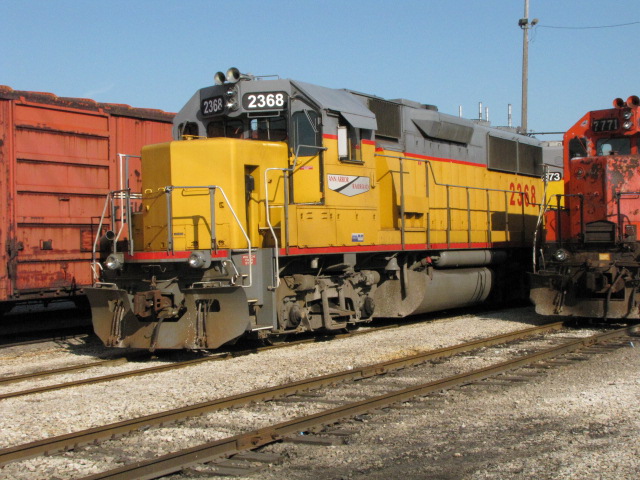
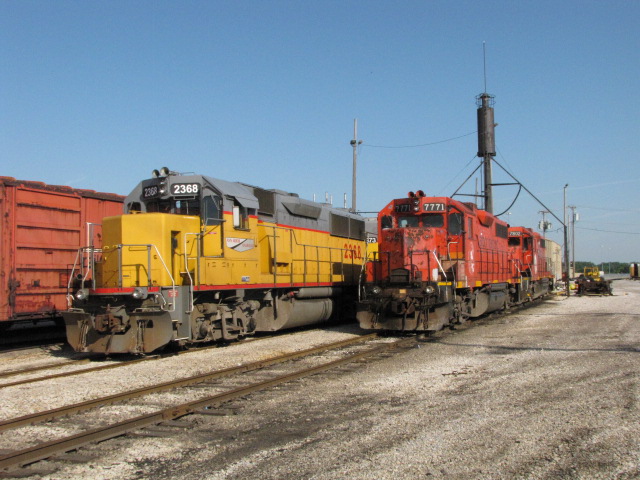

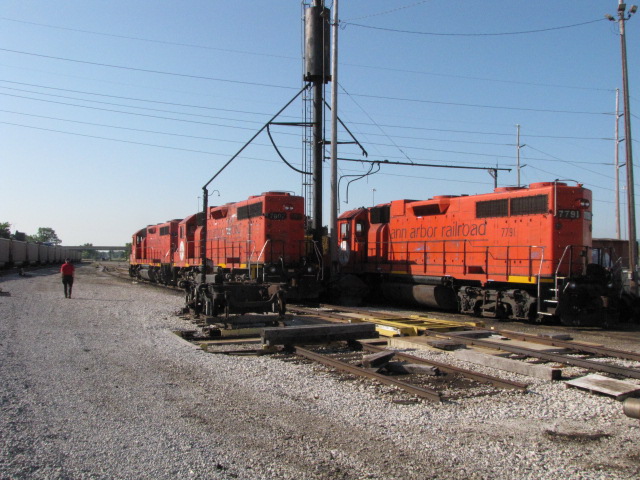
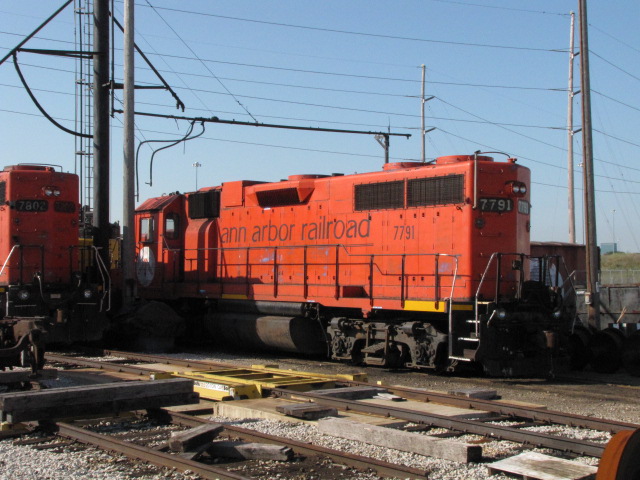
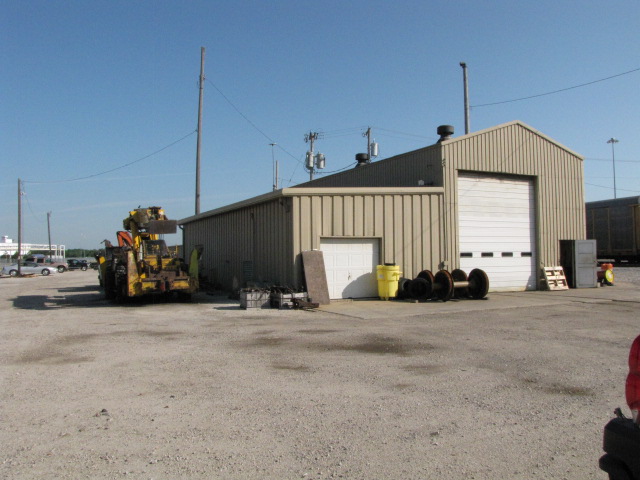
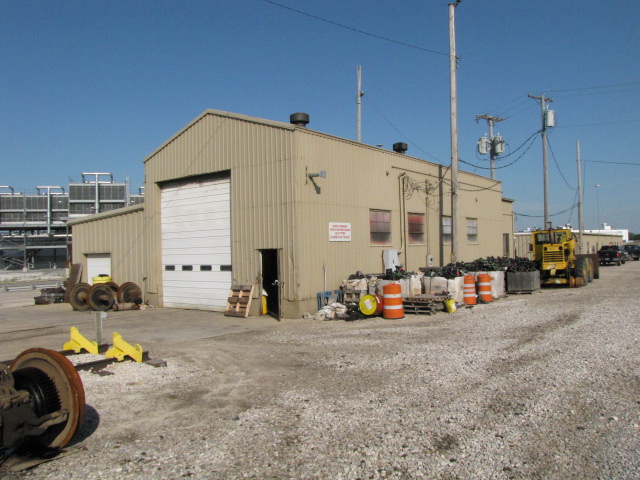

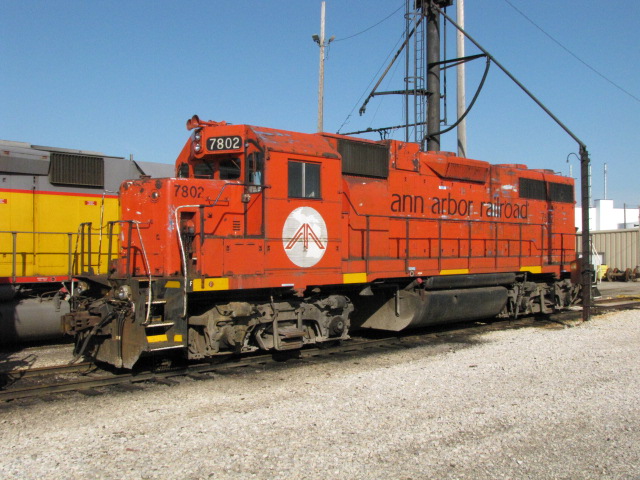
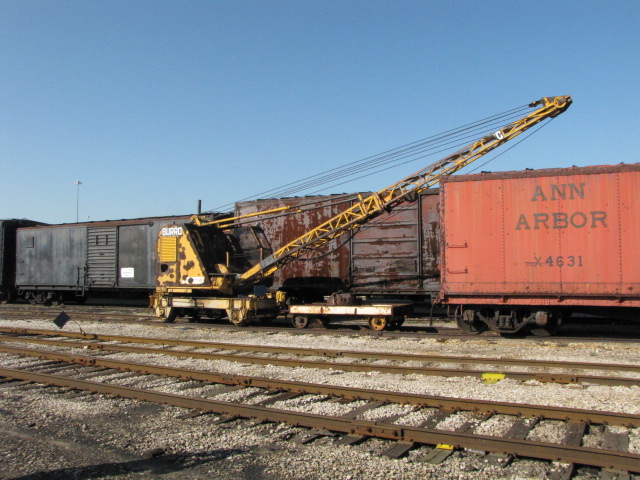
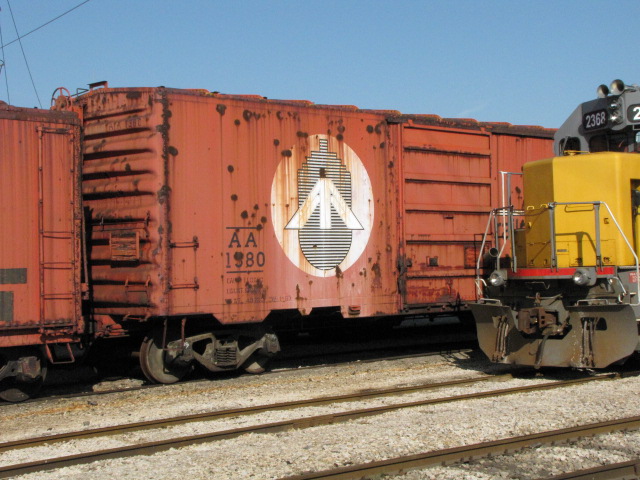
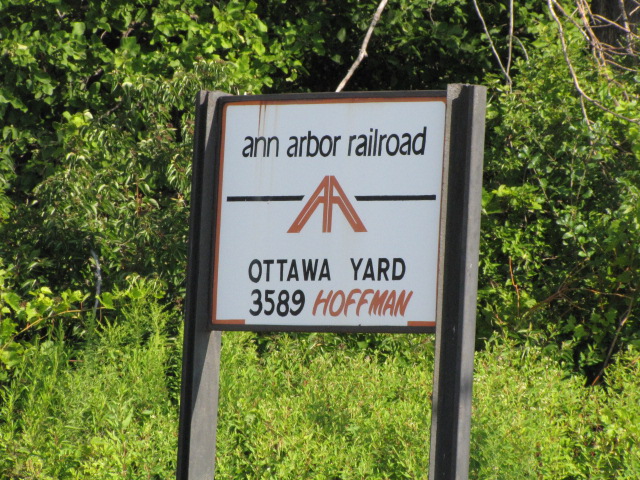

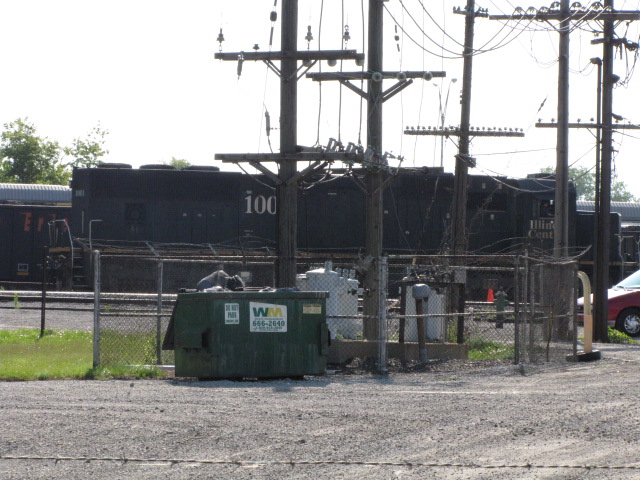
Off of Schwartz Rd, there's not too much you have access to without going onto railroad property.
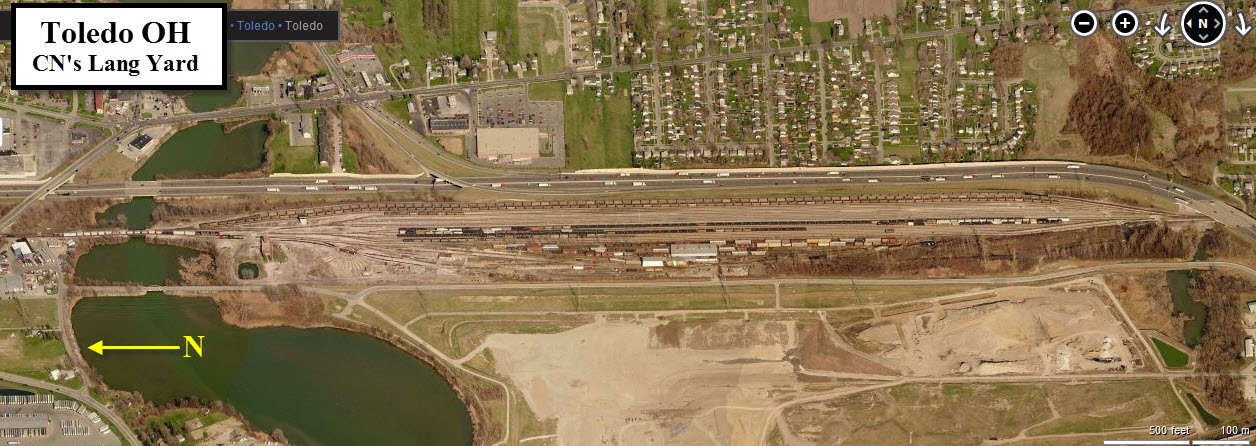
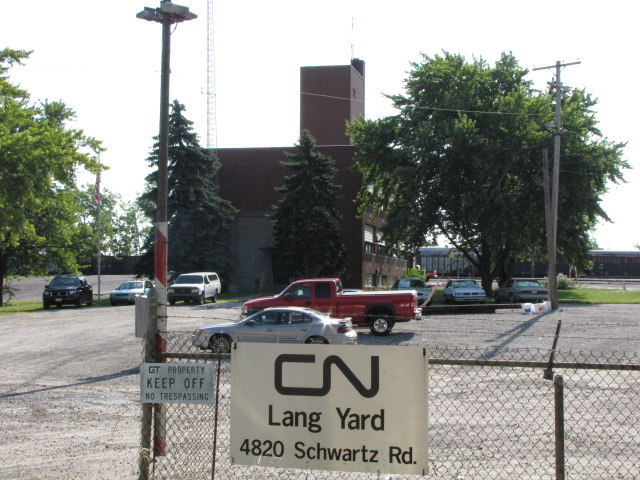
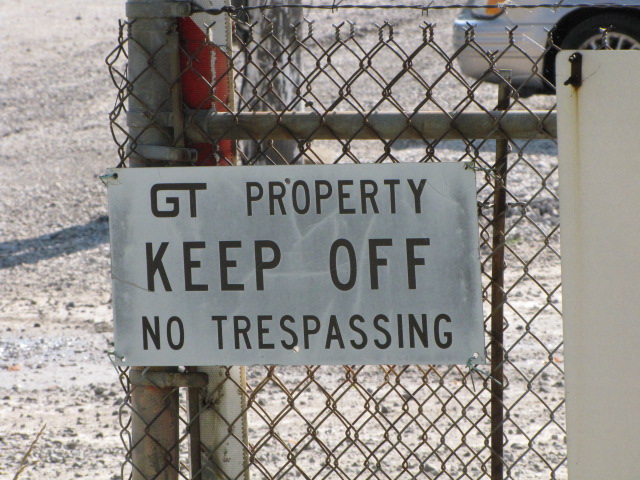
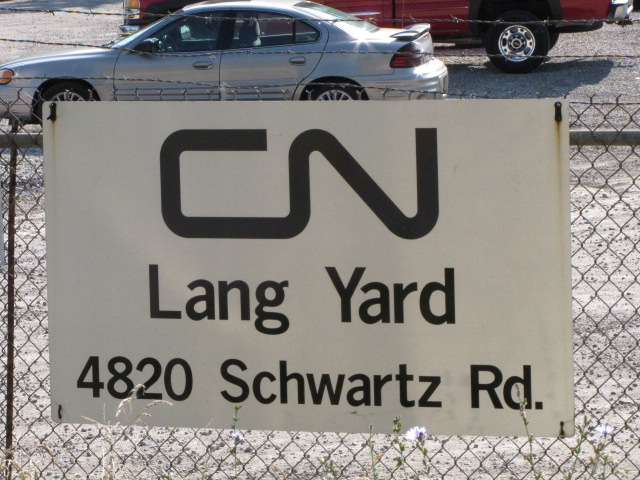
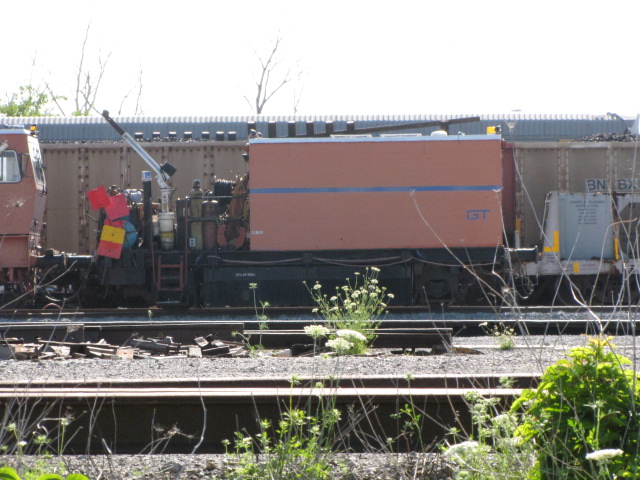
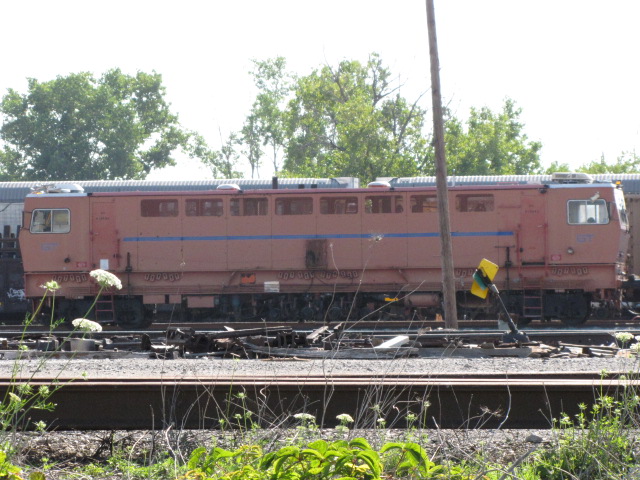
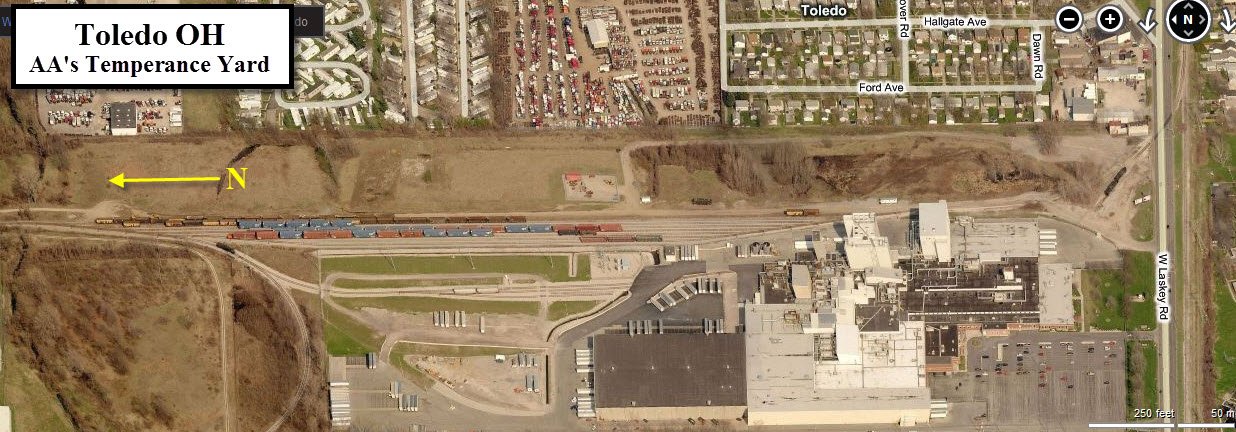
This is a former GTW and DT&I yard, now operated by the Ann Arbor.
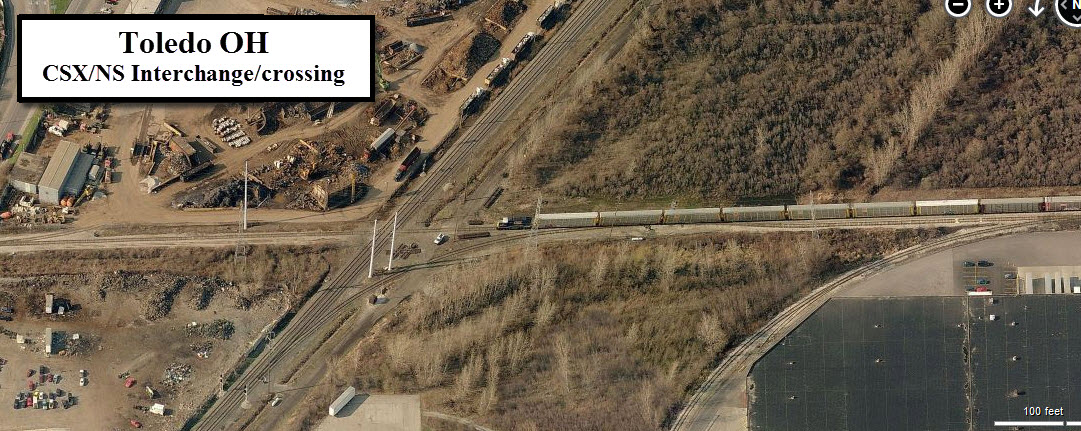
This is a crossing between the Norfolk Southern's double track main to Detroit, and the local track serving industries along Laskey Road, and the GM Powertrain plant. According to the map put out by Toledo, the track belongs to CSX, but I have seen Ann Arbor trains serving the local businesses.
The NS main is signaled for both tracks in both directions, but CSX's track is only signaled for trains coming from the yards (EB).
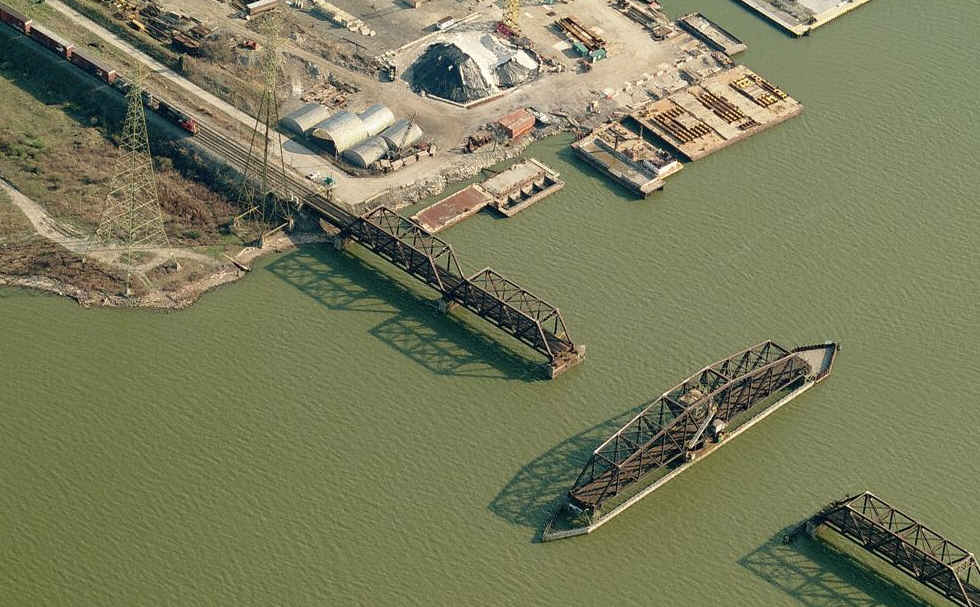
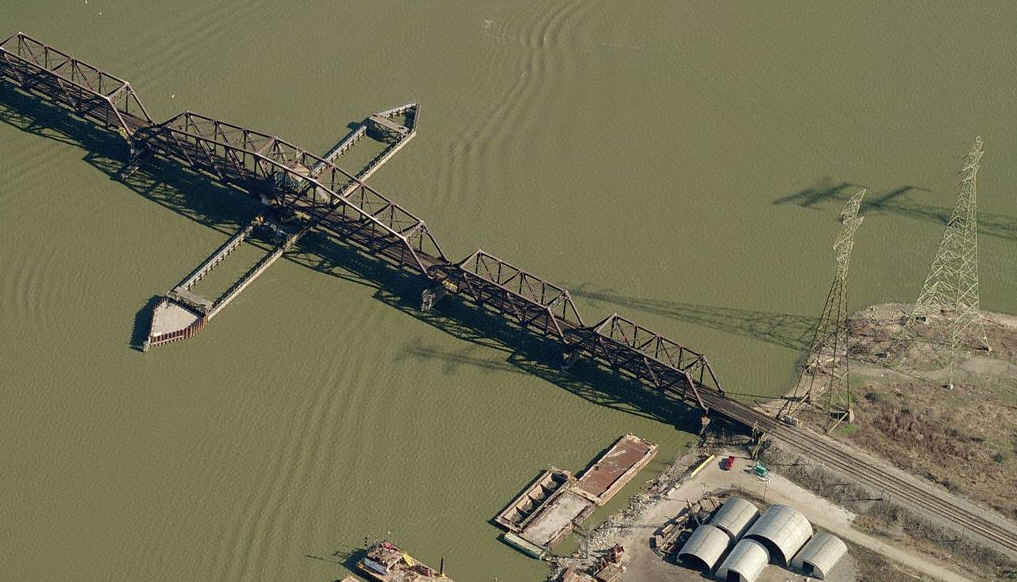
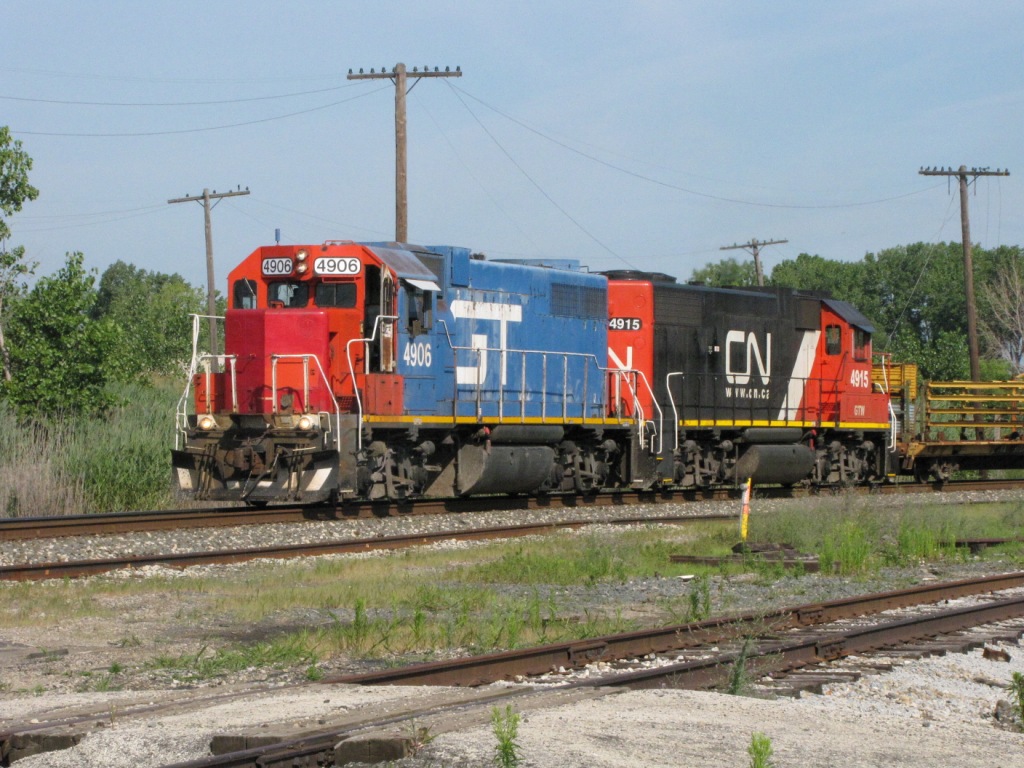
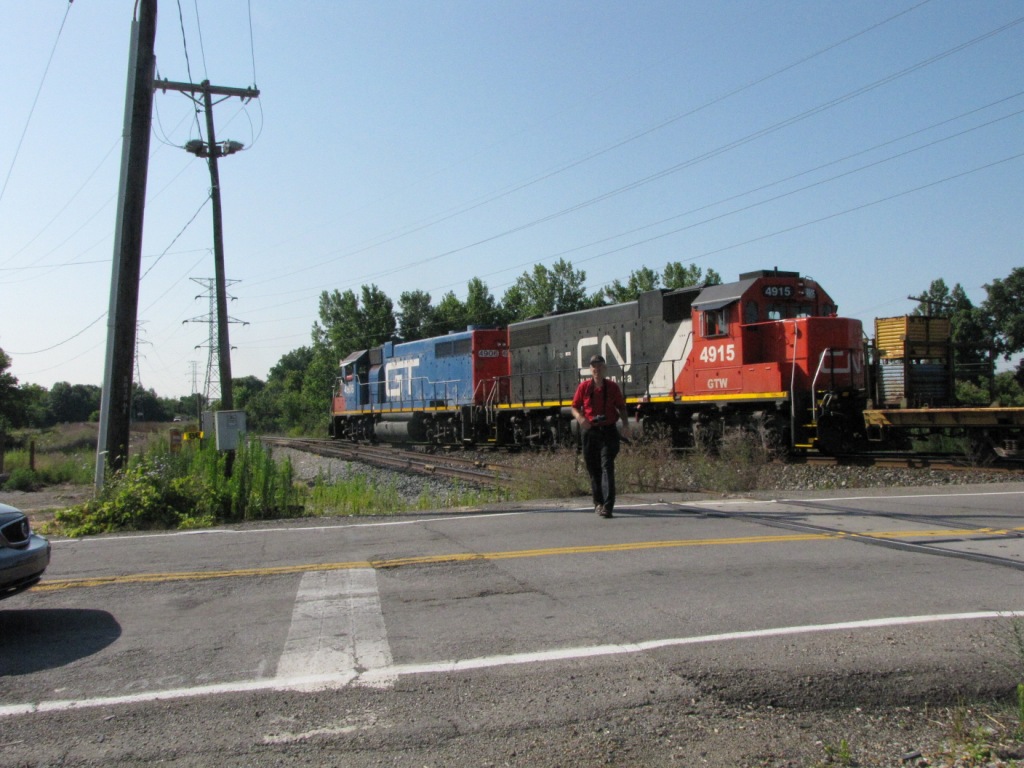
Two views of the northern most swing bridge, 1 of 3, with a CN freight
waiting for it to close. Typical of all three bridges.
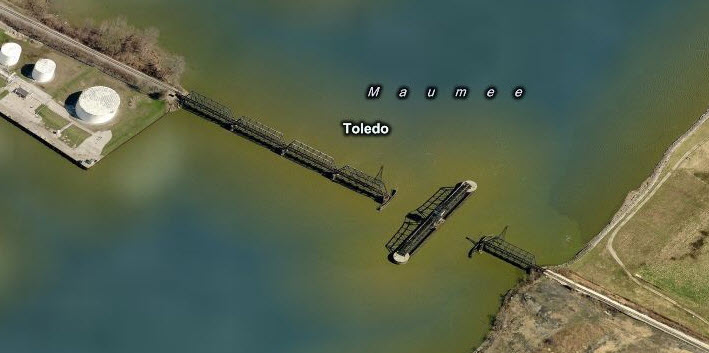
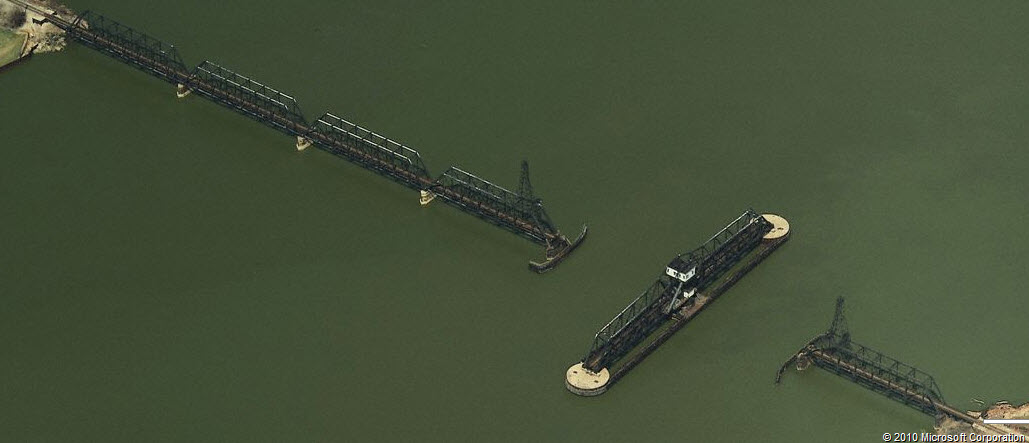
The 2nd bridge of three.
NS Bridges/Overpasses
Used for grade separation purposes so we don't get
stuck waiting for the train!
Provided more for reference and historical purposes rather than something to
go and shoot....
 Detroit Ave Overpass
 Berdan Ave Overpass
 Central Ave Overpass

 Post Rd Overpass

 I-75 Overpass
 Monroe St Overpass
 Bancroft St Overpass
 Dorr St Overpass
 Bridge over Ottawa River - abandoned

 Bancroft St Overpass - abandoned
 I-75 Overpass - long abandoned
 Secor Rd Overpasses
 Semaphore
Just by chance, I saw this semaphore from the tower. It is located behind a business off Matzinger, and we asked for permission to go onto their fenced in parking lot to take these pictures.
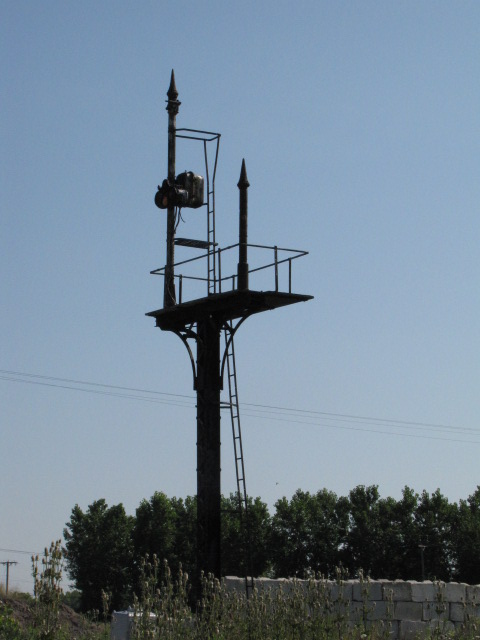
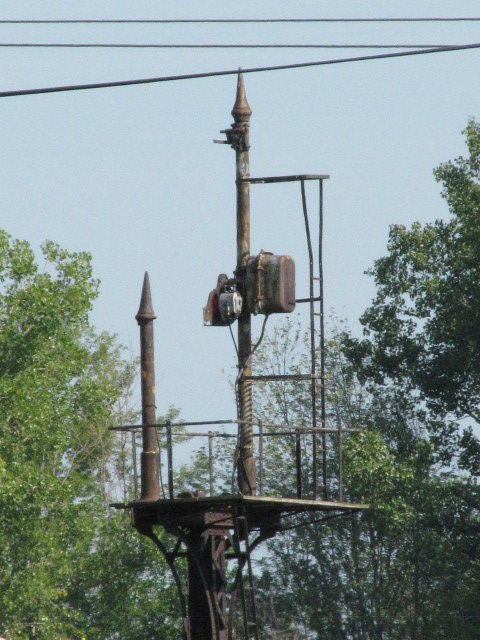
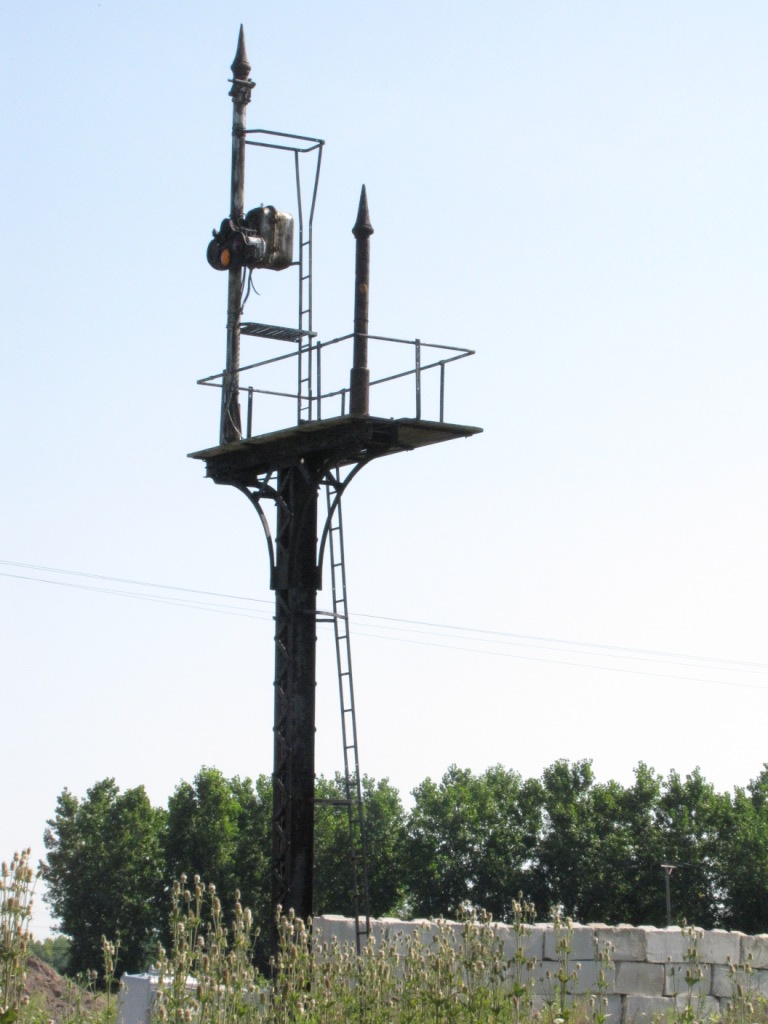
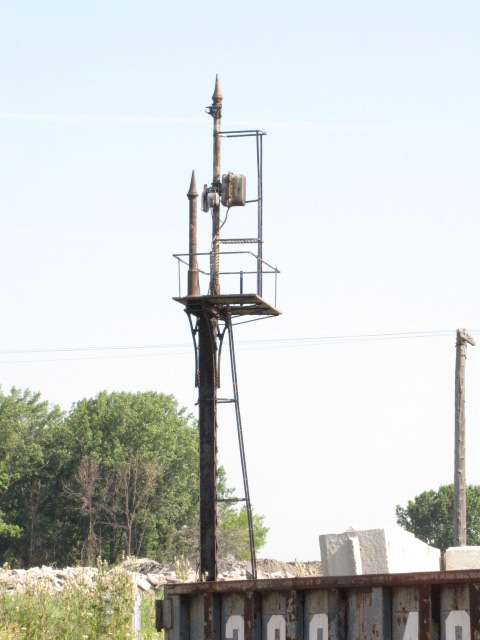
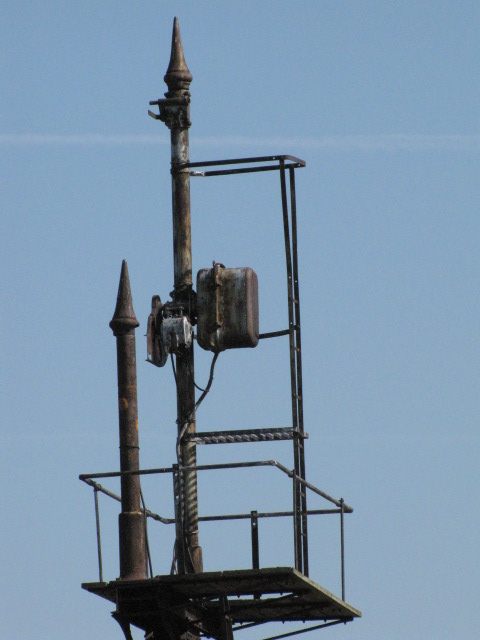
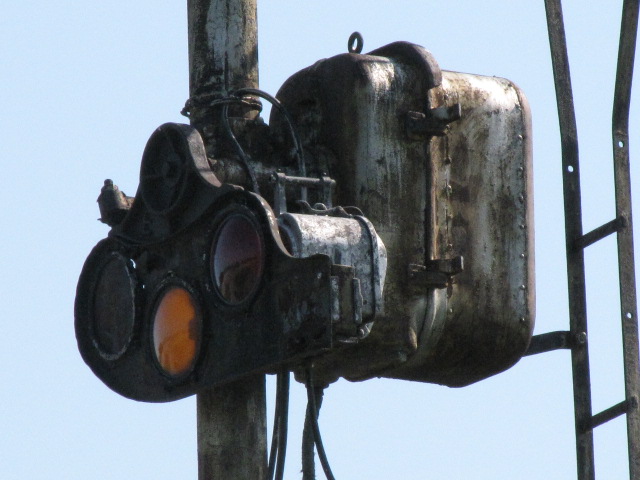
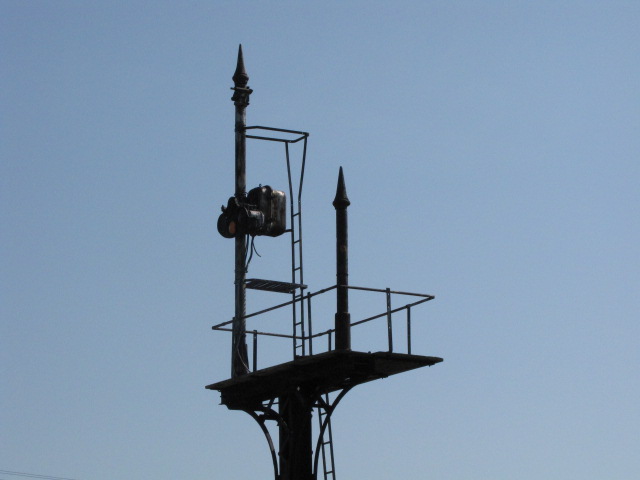
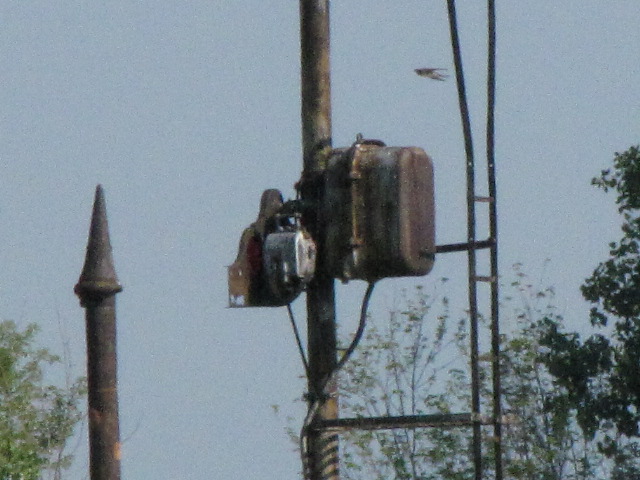

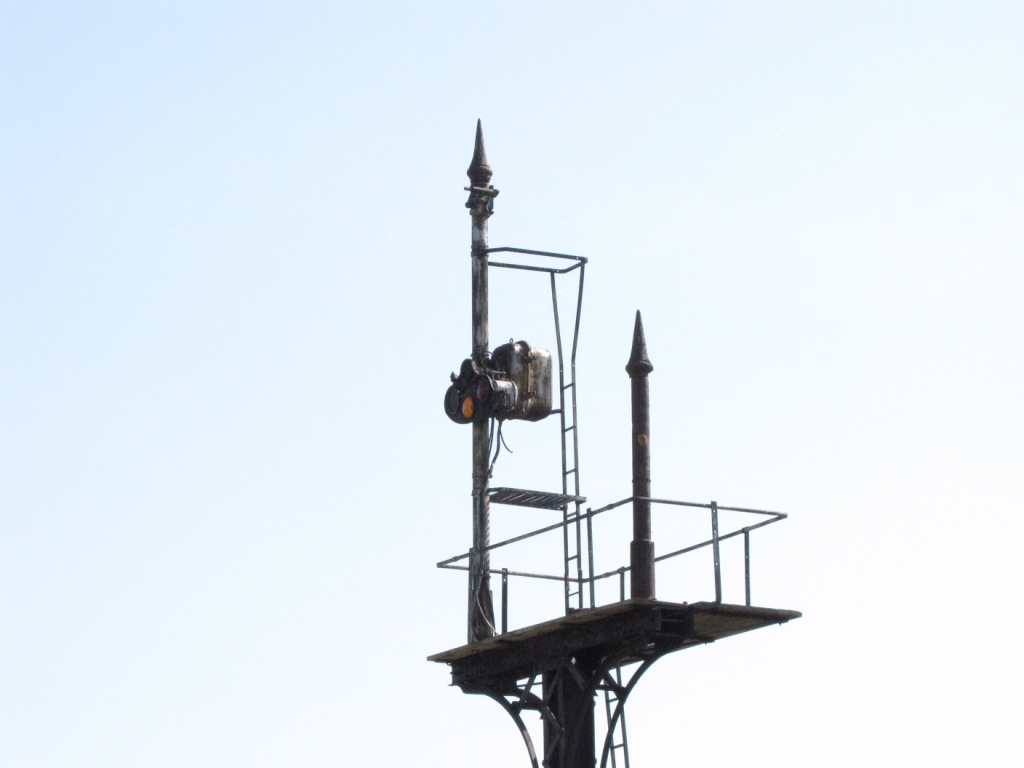

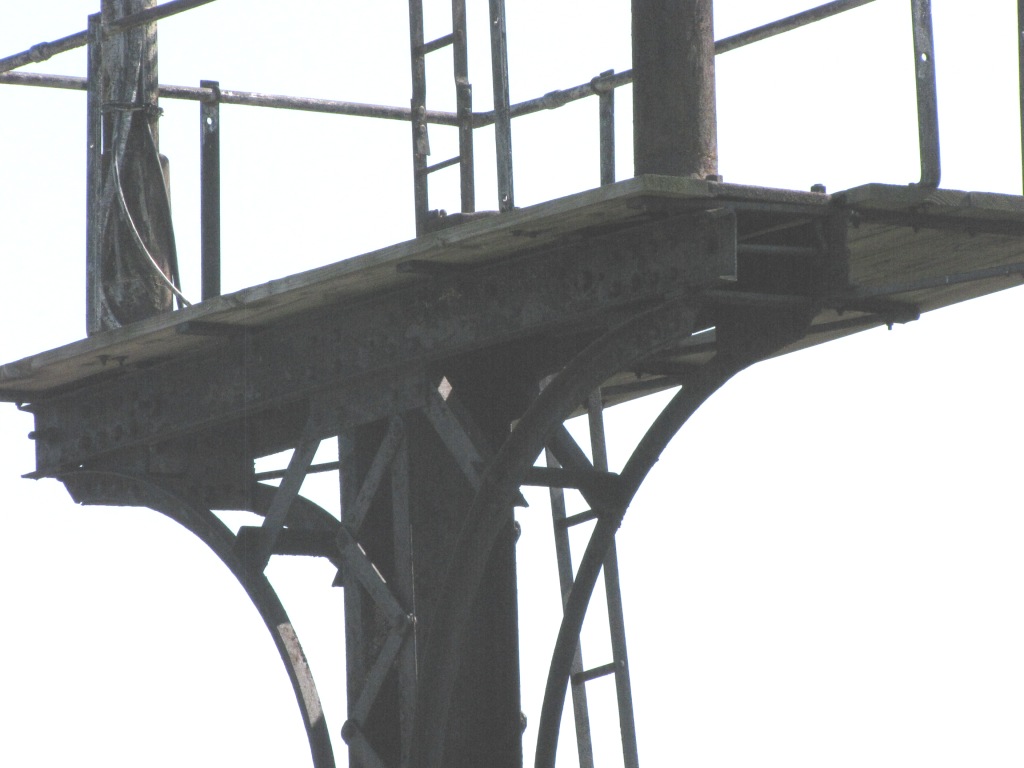


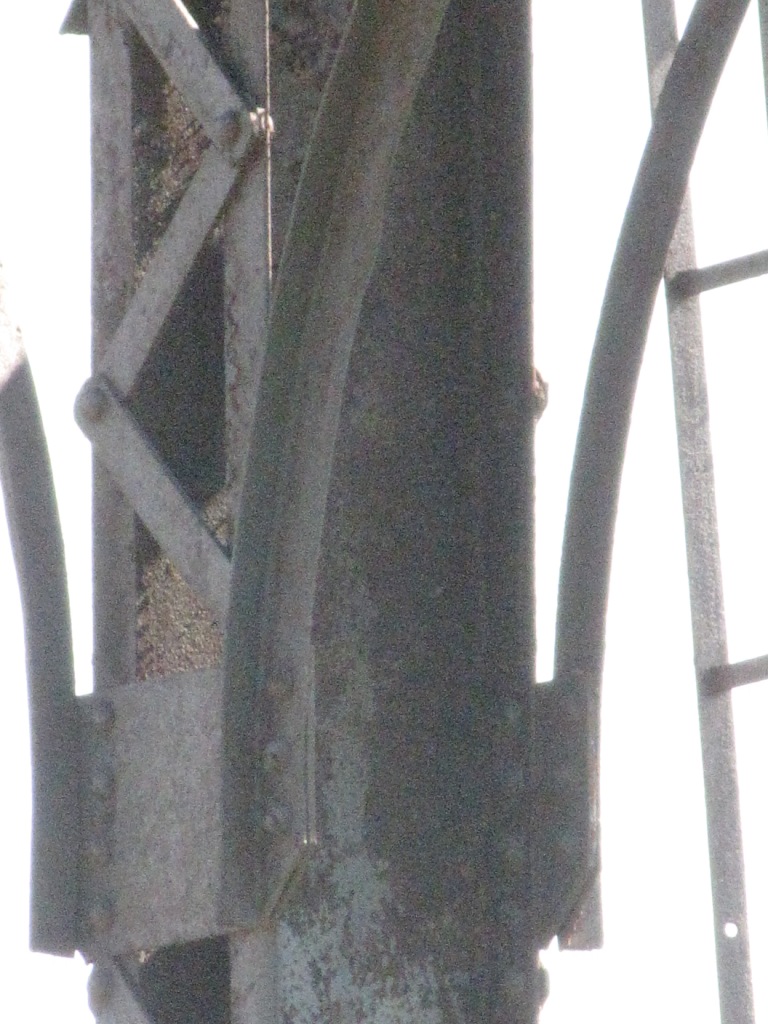
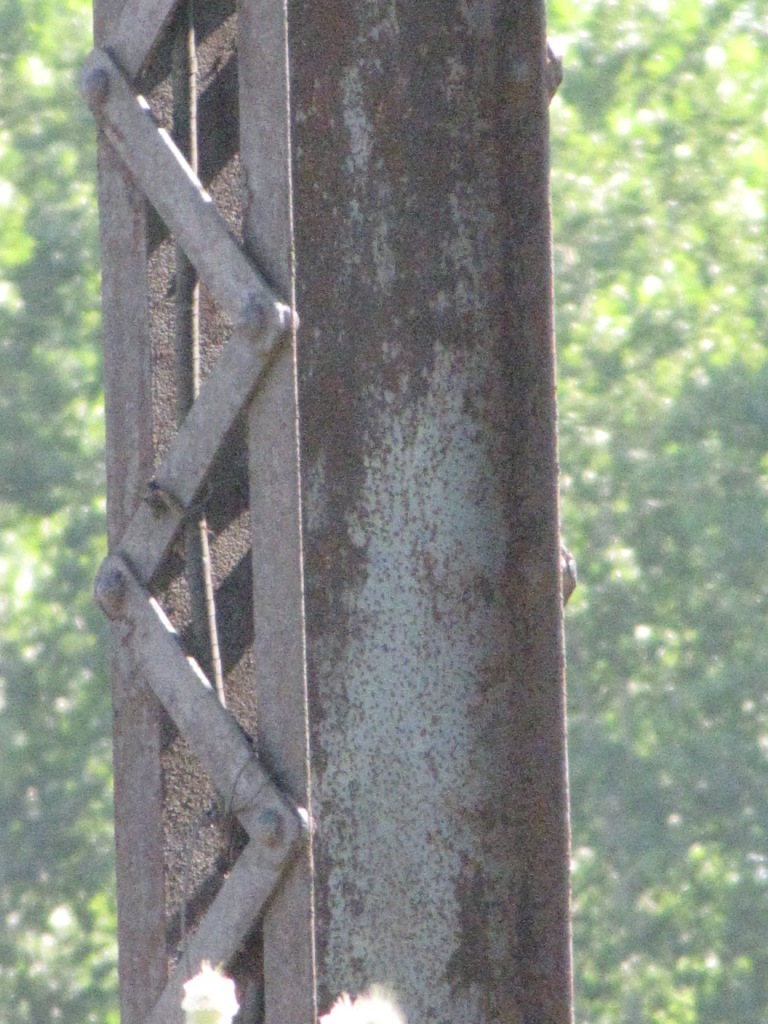
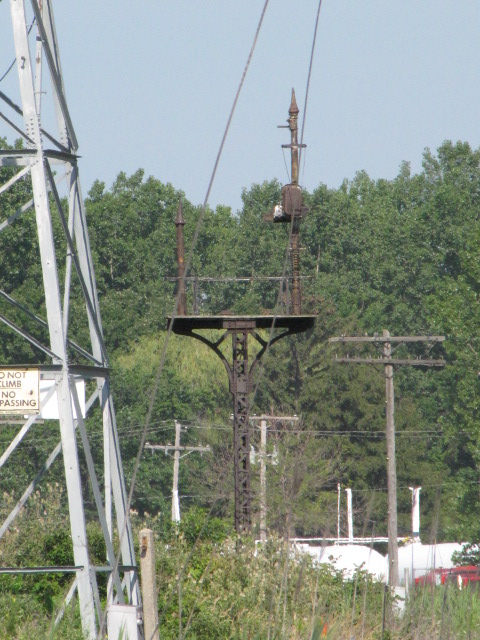 The semaphore sighted from the tower.
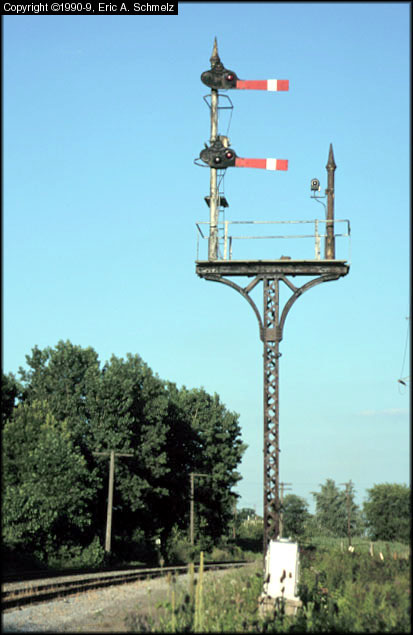
A great photo of this installation in better days,
photo by Eric Schmelz in the summer of 1998, used with permission
It's funny how some parts were left behind and others taken, guess it
depended on what needed replacing elsewhere :-)
Notice the blue light on the doll post!
 at the AA Tower
Signals around the AA Tower, site #2.


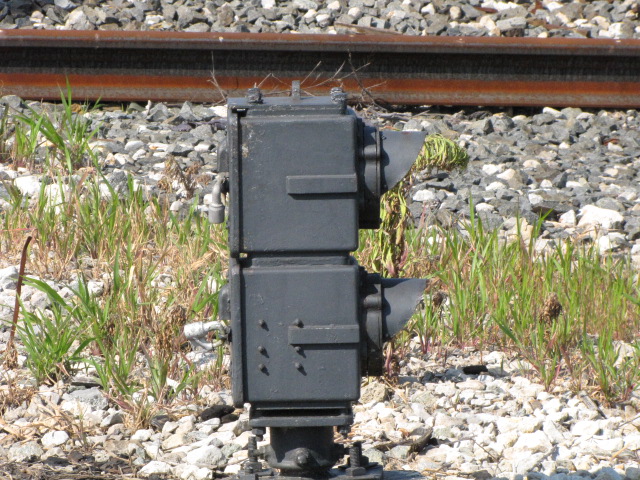
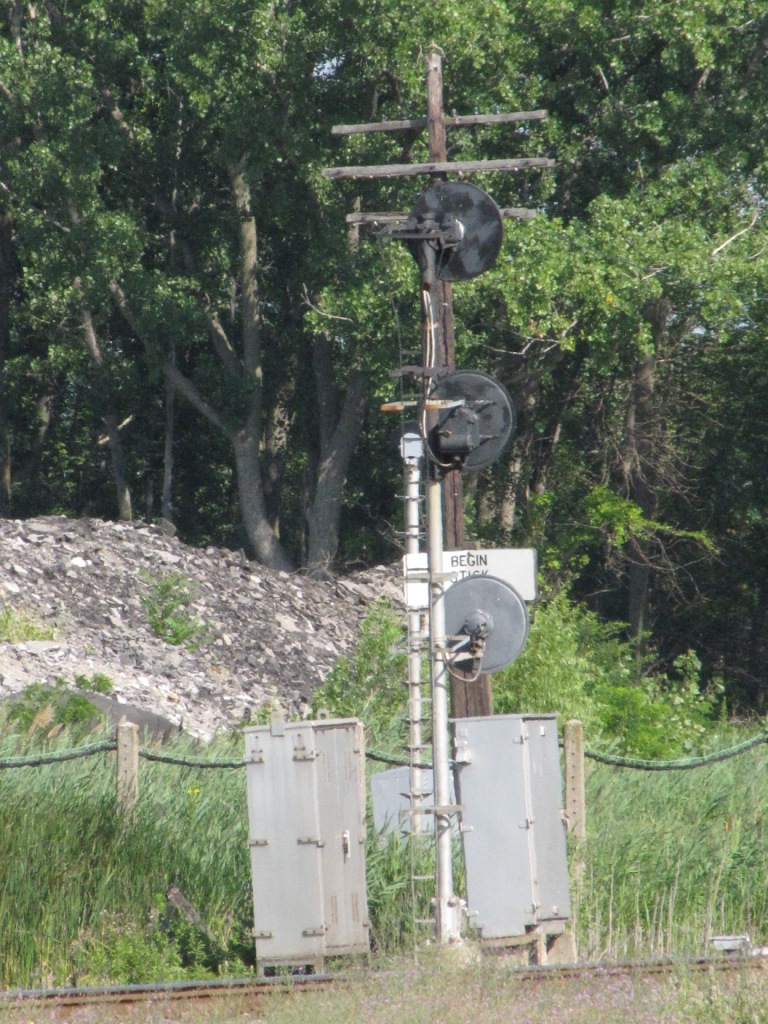 Some of the signals around the tower.
 NS Bridge
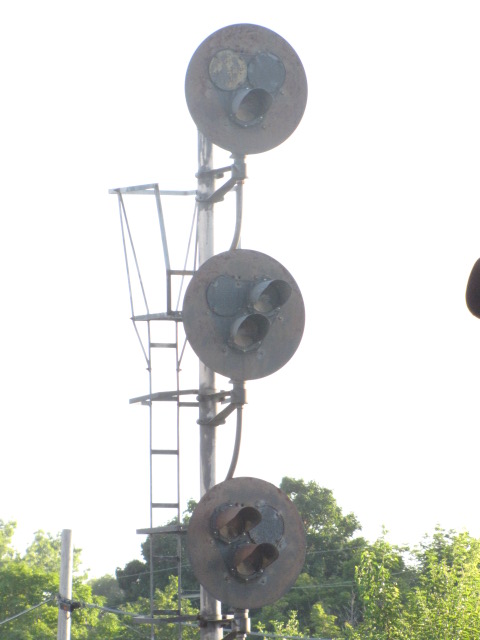
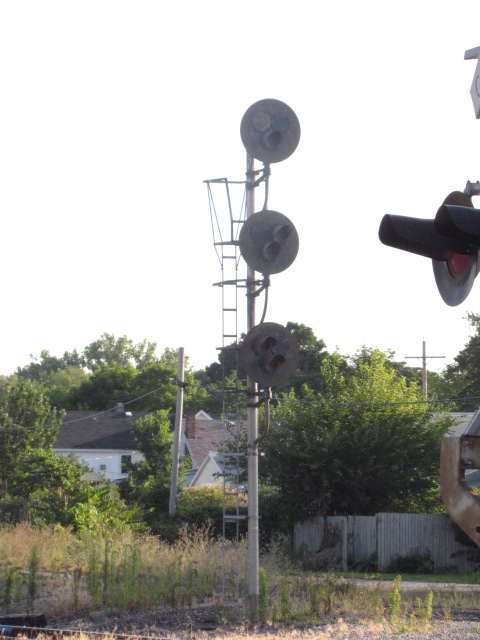
Pictures of the approach signals on the east bank for the third bridge
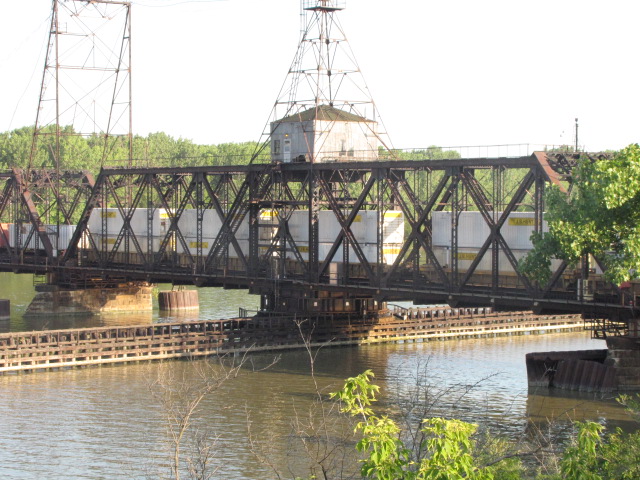
Disclaimers:
I love trains, and I love signals. I am not an expert. My webpages reflect what I find on the topic of the page. This is something I have fun with while trying to help others.
Please Note: Since the main focus of my two websites is railroad signals, the railfan guides are oriented towards the signal fan being able to locate them. For those of you into the modeling aspect of our hobby, my indexa page has a list of almost everything railroad oriented I can think of to provide you with at least a few pictures to help you detail your pike.
If this is a railfan page, every effort has been made to make sure that the information contained on this map and in this railfan guide is correct. Once in a while, an error may creep in :-)
My philosophy: Pictures and maps are worth a thousand
words, especially for railfanning. Text descriptions only get you so
far, especially if you get lost or disoriented. Take along good
maps.... a GPS is OK to get somewhere, but maps are still better if you get
lost! I belong to AAA, which allows you to get local maps for free
when you visit the local branches. ADC puts out a nice series of
county maps for the Washington DC area, but their state maps do not have the
railroads on them. If you can find em, I like the National Geographic
map book of the U.S..... good, clear, and concise graphics, and they do a
really good job of showing you where tourist type attractions are, although
they too lack the railroads. Other notes about specific areas will
show up on that page if known.
Pictures and additional information is
always needed if anyone feels inclined to take 'em, send 'em, and share 'em,
or if you have something to add or correct.... credit is always given! BE
NICE!!! Contact info is
here
Beware: If used as a source, ANYTHING from Wikipedia must be treated as being possibly being inaccurate, wrong, or not true.
RAILFAN GUIDES HOME
RAILROAD SIGNALS HOME
NEW 07/19/2009
Last Modified
01-Jan-2017